
Newsletters
July 2025
Hi all! We hope your summer has been enjoyable. In this newsletter, we share some insights from the 2025 ICER, upcoming grant opportunities, and another Alumni spotlight. Please continue to share any information that you think the broader ICER community might be interested in!
We want to bring attention to Peter Levine’s blog post reflecting on 2025 ICER at UCLA this past summer. Peter shares some important thoughts on the state of CER in the discipline.
Community Action Research Initiative (CARI) Grants (Deadline 8/28/2025)
The American Sociological Association invites applications for CARI grants for projects that bring social science knowledge and methods to bear in addressing community-based problems. Note that a co-applicant must have a PhD in sociology to be eligible.
Proposals are invited for community-academic partnerships that link an explicit research design to a concrete social action strategy. Projects should have specifically stated social change goals. In the past, SIF has funded projects in civil rights, community organizing, crime and law, education, health, housing, immigration, labor organizing, and language/literacy.
Alumni Research Spotlight
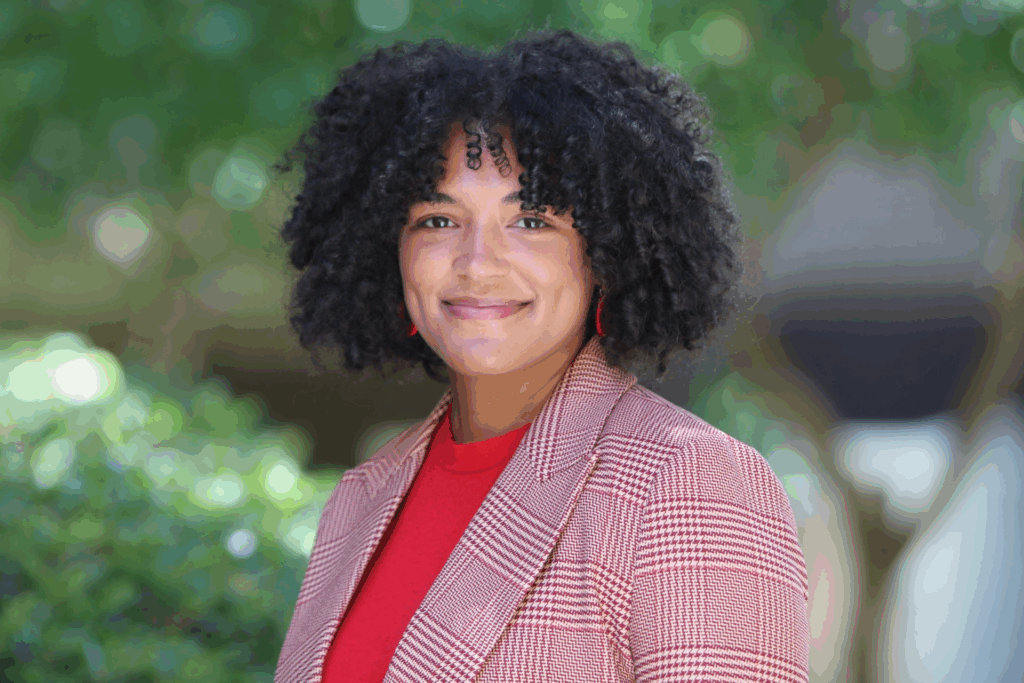
Elizabeth “Jordie” Davies
Assistant Professor, Political Science, and Faculty affiliate member of the UCI Culture and Theory Ph.D. Program, University of California, Irvine
Project Summary: My book-in-progress, Alienated Activism: The Process and Promise of Black Social Movements, proposes the framework “Alienated Activism” as a new model of Black social movements. This model asserts that anti-Blackness creates alienating conditions for Black people. Experiences with anti-Black racism, violence, and exclusion make Black people feel that they “have to do something” because the political system will not work for them without additional pressure and advocacy. Thus, these alienating conditions prompt Black people to seek out the Black political organizing and education traditions. Through these traditions, alienated activists gain political opportunities and learn new political values, including identity affirmation, collective action, and transformation.
My core case is the Black Lives Matter mass movement, particularly in Chicago. Through interviews with 75 activists and organizers from racial justice and progressive groups, I tell the story of the BLM movement in the city. In particular, I consider how Black alienated activists took the injustice of anti-Black police violence and mobilized a city wide movement. In particular, I focus on the organizational stories of the BYP100, the Chicago Alliance, and BLM Chicago, also drawing upon organizational archives, political education materials, and news articles.
What have you learned about CER through that research?
Relationships are at the core of the Black political organizing tradition. To do difficult political work, you need to trust your fellow organizers. Similarly, I find that trusting relationships are important for civically engaged researchers. It took time for me to connect with the organizers and activists I needed to speak to, and I did that by getting to know people. Honesty, communication, and, sometimes, just being around are key to building community around a research project.
Any ethical considerations in pursuit of that research?
Always! I think it’s important to let people know what the project is about, as well as how you will use their words and characterize their responses. It is a profound privilege to be entrusted with people’s stories. In light of that trust, attending closely to accuracy, care, and transparency with participants are important foundations for the work.
Thank you to Jordie for sharing this important research!
We need more resources for civic engagement teaching materials!
Do you have resources that we could share on our website? We’re looking to collect a wide range of materials, including syllabi, teaching exercises, classroom activities, and assessment tools. If you have resources to contribute, please share them in this Google Form.
June 2025
Hi all! We are excited to share the latest updates and opportunities for the ICER community as we head into summer. We encourage you to continue sharing opportunities and events with us for our newsletter.
Strategies for Teaching American Politics During Turbulent Times (6/5 at 1 pm EST)
Join the panel next week for a webinar with expert panelists for a discussion on teaching American Politics in times of political uncertainty and crisis. Participation is free, but registration is required. Responding to the current political environment in the United States, the panelists will share how they are rethinking the Introduction to American Politics class. Panelists will address overarching questions about structuring the course, incorporating insights from Comparative Politics, and teaching particular topics. Panelists will also share specific strategies or activities they use in their classes.
APSA Summer Centennial Grants Open (Due 6/15)
The Summer cycle of the Centennial Center Research Grants supports research in all fields of political science conducted by political scientists in non-tenure track or contingent positions; political science faculty of all ranks who are employed in departments that do not grant PhDs, including community college faculty and graduate students in political science disciplines. Individual grant proposals may not exceed $2,500. Applications are due on June 15, 2025!
JPSA-APSA Working Group on “Civically Engaged Research for Critical Issues in Society” (Due 6/1)
The American Political Science Association (APSA) and the Japanese Political Science Association (JPSA) are pleased to announce a Call for Applications for early-career scholars from the United States or Japan who are interested in conducting civically engaged research related to issues of demographic change. The second annual JPSA-APSA Working Group on “Civically Engaged Research for Critical Issues in Society” will be held alongside the 2025 JPSA Annual Meeting in Tokyo, Japan from October 9-12.
The program is an opportunity to share and improve research towards publication, develop new scholarly networks, and explore the use of civically engaged research in investigating some of the critical issues facing our societies. The 2025 Working Group theme is “Political Transitions in Aging Societies”. Organizers will cover participation costs (including airfare and accommodation) for up to 20 qualified applicants.
Applications are due June 1st.
Alumni Research Spotlight
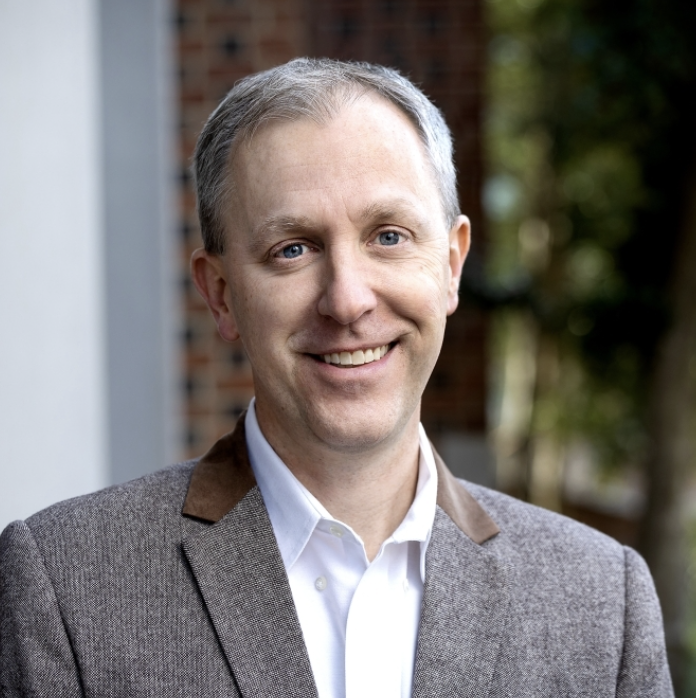
Graham Bullock
Associate Professor, Political Science, Davidson College
ICER 2019 Alumni
As a member of the inaugural ICER cohort in 2019, I was interested in thinking through and getting feedback on a project idea that I had been working on with some colleagues and students back at Davidson College, where I had recently received tenure. Presentations and comments from other ICER members, the organizers, and our guest speakers provided important food for thought as I mapped out more thoroughly my civically engaged research plans.
Six years later, those plans are still being implemented through Davidson’s Deliberative Citizenship Initiative (DCI), which is dedicated to creating opportunities for Davidson students, faculty, staff, and members of the wider community to productively engage with one another on difficult and contentious issues facing our community and society. I have served as its Faculty Director since its inception and have worked closely with our college and community co-conveners to host deliberative forums, guest speakers, a small group deliberation series, a deliberation facilitator’s training program, a student fellows program, a Deliberative Pedagogy Collaborative for faculty, and more. We have had hundreds of people from on and off campus participate in our programs and have received incredibly positive feedback about them – 97% of participants at our most recent forum, for example, said they were likely or highly likely to recommend participating in a DCI Deliberative Forum to a friend.
We have been collecting data on participants’ experiences along the way and are in the process of compiling and analyzing the results since we ran our first events in 2020. Following our approved human subjects research protocol, we have also recorded the conversations of our small group discussion series and review them regularly for ideas about what is working well and what we can improve in terms of how we design and facilitate these conversations. We have gained important insights about deliberation and the mechanics of deliberative democracy that we are actively applying through the initiative and I am excited to share with others engaged in similar efforts.
Suffice to say, I have learned a lot about civically-engaged research through this work. My primary lesson learned is that it is not easy to do both the civic engagement and research components of CER well at the same time. It is particularly difficult when you continue to teach in the classroom and aim to institutionalize the program you have developed. Working closely with partner groups throughout the process, developing rigorous training programs, and creating robust background materials for participants while also systematically designing and deploying data collection instruments and building a durable and sustainable “civic infrastructure” takes a lot of time, attention, and energy.
While I have given presentations about the DCI at numerous conferences and workshops, I have not yet had the additional bandwidth to take the next step of publishing the results and conclusions from our work. My solution has been to take a long-term view of the project that prioritizes the civic engagement and data collection components while delaying the research dissemination piece until later. My hope is that in the next year or two, I will find the time to lean more into this important part of the CER process.
So for those out there facing similar tradeoffs, you are certainly not alone! My advice, for what it is worth, is to try to take a long-term view, don’t take shortcuts that you might regret later, and keep good notes along the way so when it comes time to write things up, it will be that much easier. Good luck to everyone engaged with this challenging but critically important work.
May 2025
Applications are closed for ICER Summer 2025!
ICER will be held at UCLA this year from July 7-10.
Thinking about participatory research and are in early stages? Consider these great resources to guide you.
- Urban Institute’s Equitable Compensation for Community Engagement Guidebook
- Community Action’s Compensation Philosophy
- VCU’s Guidance on Compensation of Community Partners
- Urban Institute’s Data Walks: Innovative Ways to Share Data with Communities
Alumni Research Spotlight

Alex J. Moffett-Bateau
Associate Professor, Political Science, John Jay College of Criminal Justice – CUNY
ICER 2021 Alumni
Project Summary: My book, Redefining the Political (Temple University Press, 2024), documents the political life of a community of Black women living below the poverty line. I spent a year interviewing residents of a public housing development on the far South Side of Chicago about their politics, political communities, and how they create collective power. I use radical Black feminist political theory and develop a framework called the political possible-self, which argues that belonging to a community and developing political imagination foment change. These women employ grassroots efforts to subvert oppressive power structures by protesting institutions within their communities, addressing the benign neglect of their housing development, organizing community art shows and meals, volunteering at local public schools, and holding meetings to increase the political confidence of public-housing tenants by educating them on navigating government bureaucracies. Ultimately, Redefining the Political shows how political engagement at both the individual and community levels can be fruitful for nontraditional political contributions. This book was evaluated by the Knowledge Unlatched Selection Committee and was chosen as one of their KU Select 2025. (For more information about the KU funding award, this Taylor and Francis-created librarian resource does a nice job of describing the KU Select process.
What have you learned about civically engaged research through this project? (If applicable, what ethical considerations have you had to contend with in pursuit of this research?)
One of my central concerns during the publication of Redefining the Political was the inaccessibility of many academic books. After being confronted with the cost of book and article publication, I came to believe in open-access scholarship, especially for those of us who are invested in civically engaged research. Ultimately, the real value-add of civically engaged research is its capacity to engage publics inside and outside of the academy. Open-access research and open educational resources are critically important. As an educator, I prioritize OER texts in my classrooms, and as a researcher and writer, I prioritize the accessibility of Redefining the Political (access here) as well as in my other research.
Because of the KU Select 2025 award, Redefining the Political will be open-access and freely available to anyone in the world with internet access! More than anything, I am the proudest of this achievement. It is critically important that the women, whose experiences I documented, can access and use the research in service of their own political hopes and dreams. Below, I’ve provided a link to the full citation for the open-access eBook. The eBook can also be downloaded for free from major eBook retailers, or Temple University Press directly:
Moffett-Bateau, Alex J. Redefining the Political: Black Women Living Below the Poverty Line in Chicago, Black Feminism, and the Politics of Everyday Life. Philadelphia: Temple University Press. September 6, 2024. (Knowledge Unlatched Open Access Edition.) https://openresearchlibrary.org/content/7a407201-7861-40f1-a909-0afc4ba96667
March 2025
We are excited to share the latest updates and opportunities from the ICER community this spring.
Applications are still being accepted for ICER Summer 2025! (Deadline 4/21)
ICER will be held at UCLA this year from July 7-10. For more detailed information, see the call for applications document here. Please share with those in your network and encourage scholars at all career stages to apply!
Check out the Politics, Groups, and Identities Civically Engaged Research Special Issue!!!
In this new PGI issue, check out lots of great work (many from ICER alumni) on civically engaged research. We encourage you to amplify this research within your networks.
| Title | Link |
| From Public Engagement to Civically Engaged Research | https://www.tandfonline.com/doi/full/10.1080/21565503.2025.2463076 |
| What Do We Mean by “Community”? Defining Community for Civically Engaged Research | https://www.tandfonline.com/doi/full/10.1080/21565503.2025.2457994 |
| Who Counts in Civically Engaged Research? Rethinking Expertise and Authority in Politics | https://www.tandfonline.com/doi/full/10.1080/21565503.2024.2423076#abstract |
| Vulnerability as Identity Facet: Reconceptualizing Vulnerability to Conduct Civically Engaged Research | https://www.tandfonline.com/doi/full/10.1080/21565503.2024.2423074 |
| Best Practices: CER with Vulnerable Populations in Contentious Political Environments | https://www.tandfonline.com/doi/full/10.1080/21565503.2024.2423073?src=exp-la |
| Experiences of Immigrant Survivors of Violence with Law Enforcement | https://www.tandfonline.com/doi/full/10.1080/21565503.2025.2453174 |
| Using civically engaged research to promote young Black and Latino children’s well-being: lessons from a new interdisciplinary community-university, faculty–student collaboration | https://www.tandfonline.com/doi/full/10.1080/21565503.2024.2423081 |
| Methodological Pluralism in Civically Engaged Research | https://www.tandfonline.com/doi/full/10.1080/21565503.2024.2444894 |
| Civically Engaged Research in Political Science: A Methodological Guide | https://www.tandfonline.com/eprint/SQH6GVGQVIMCICZUGIVV/full?target=10.1080/21565503.2024.2357078#abstract |
| Using CER to Understand the Strategic Dynamics of Social Media Outreach | https://www.tandfonline.com/doi/full/10.1080/21565503.2024.2423072 |
| A Case for Accompaniment in Struggles Against the State: Designing Ethically Sensible and Responsive Research Partnerships in Political Science | https://www.tandfonline.com/doi/full/10.1080/21565503.2025.2463074 |
Going to MPSA Chicago this year? Check out some great panels with papers related to Civically Engaged Research!
Thursday, April 3
Place, Displacement, and Community: Challenges in Clean Energy Transitions
- 9:50 – 11:20am CDT
Student Vote Research Network 2025 Workshop
- 1:00 – 5:00pm CDT
Friday, April 4
Civic Education in K–12 Schools
- 3:20 – 4:50pm CDT
Saturday, April 5
Environmental Policy, Inequality, and Equity
- 8:00 – 9:30am CDT
Sunday, April 6
The Great Escape: The Politics of Prisons and Jails
- 8:00 – 9:30am CDT
We need more resources for civic engagement teaching materials!
Do you have resources that we could share on our website? We’re looking to collect a wide range of materials, from syllabi to teaching exercises, classroom activities, and assessment tools. If you have resources to contribute, please share them in this Google Form.
February 2025
We’re happy to share some news and updates with you, including spotlighting one of ICER’s alumni, Nhat-Dang Do!
Applications are now being accepted for ICER Summer 2025! (Deadline 4/20)
ICER will be held at UCLA this year from July 7-10. For more detailed information, see the call for applications document attached or read more on the ICER website. Please share with those in your network and encourage scholars at all career stages to apply!
Calls for Chapter Submissions for Teaching Civic Engagement in Challenging Times (Abstracts Due 4/15)
The co-editors of a forthcoming edited collection in the APSA-De Gruyter Teaching Civic Engagement Series invite authors to submit chapter proposals for a new volume, Teaching Civic Engagement in Challenging Times: Global Perspectives on Democratic Education for All. See this call for chapters to learn more.
APSA Spring CCRG Applications are Open (Deadline 4/15)
The Spring cycle of the Centennial Center Research Grants supports research in all fields of political science conducted by political scientists in non-tenure track or contingent positions; political science faculty of all ranks who are employed in departments that do not grant PhDs, including community college faculty and graduate students in political science disciplines. Individual grant proposals may not exceed $2,500. Apply using this link: https://apsa.secure-platform.com/a/solicitations/299/home
Interested in identifying a community partner for your work? Check out research4impact!
This is a great resource if you are interested in working with non-profits or local governments on your research but are not sure who to turn to! Research4impact provides thoughtful and timely practitioner-researcher matchmaking services. Interested in learning more? Read some of their impact stories.
Alumni Research Spotlight

Nhat-Dang Do
Trinity College at Hartford, ICER 2023 Alumni
Project Summary: Canvassing is widely regarded as a gold standard for boosting voter turnout, yet recent studies underscore the potential of relational organizing, which leverages pre-existing social networks to enhance voter mobilization. Green and McClellan (2020) found that a new relational organizing model, which relies on voter captains contacting members of their social network, significantly increases turnout. In this study, we implement a field experiment to investigate whether this model effectively mobilizes voters in a Black and Latine-dominant city.
More details about the project: We employed principles of civically engaged research (CER) to recruit voter captains and trained them in a socio-cultural narrative-based mobilization approach (García Bedolla and Michaelson, 2012), which we expect will be particularly effective for engaging racial/ethnic minority voters’ identities, experiences, and values. When available, post-election voter records will gauge whether voters contacted by Captains were more likely to turn out than a non-contacted control group. Preliminary survey data and voter captain logs show that relational organizing rooted in sociocultural narratives empowers voter captains by enhancing their confidence, skills, and community connections. The voter captain model could offer a powerful alternative to traditional campaign methods with the potential to foster sustained civic engagement, particularly in underrepresented communities.
What have you learned about civically engaged research through this project?
Through this project, I have gained a deeper understanding of the complexities and responsibilities involved in civically engaged research (CER), particularly the importance of reciprocity, trust-building, and ethical responsibility. Unlike traditional academic research, CER requires ongoing collaboration with community stakeholders, ensuring that research goals align with community priorities and provide tangible benefits. Compensation and equity were also critical, as paying participants acknowledged their labor and made participation more accessible, though it required careful messaging to avoid concerns about payment being tied to voter turnout. Additionally, I had to be mindful of power dynamics and representation, ensuring that the community’s lived expertise was centered rather than imposing a top-down research agenda. Maintaining non-partisan integrity was also essential, as voter mobilization efforts required careful messaging to ensure neutrality and build trust in a politically polarized environment. Another key lesson was avoiding extractive research, where data is collected but communities see little long-term benefit. Our decision to reinvest leftover funds into an off-cycle election mobilization effort reflects a commitment to sustained engagement rather than a one-time intervention. Ultimately, this project reinforced that CER is not just about producing knowledge—it is about building relationships, fostering civic empowerment, and ensuring that research is academically rigorous and socially impactful.
Here is a YouTube link to give a sense of the project. It was created by the sponsoring foundation to showcase our work: https://youtu.be/mQisDYUjhcQ?si=uidqlBIXgseR8N5k

January 2025
As we embark on a new year, we are excited to share the latest updates and opportunities for the ICER community, as well as highlight the work of one of our alumni.
ICER will be moving to Los Angeles in 2025!
Funded by a grant from the Haynes Foundation, ICER plans to be held on UCLA campus this summer. To support the sustainability of the program into the future, APSA is applying for National Science Foundation’s Ethical and Responsible Research Grant. Despite the uncertainty surrounding federal funding at the moment, we are hopeful that if reinstated the proposed project will be successful.
Receive $1,000 by incorporating Civic Engagement Materials into your course (Deadline: 2/14)
Project Pericles is offering mini grants to those who incorporate their civic and voter engagement materials into their teaching. For more information, go on the Project Pericles website.
American Council of Learned Societies: Leading Edge Fellowship (Deadline: 3/12)
Recent PhDs from across the humanities and interpretive social sciences are encouraged to apply for the 2025 Leading Edge Fellowship. Leading Edge Fellowship host organizations provide professional development opportunities and employee benefits to fellows, and draw on fellows’ scholarly perspectives and broad set of skills. Fellows receive stipends: for remote positions, $70,000 in year one, and $72,000 in year two; for in-person positions, $72,000 in year one, and $74,000 in year two. Relocation funds are available for in-person positions.
APSA Distinguished Award for Civic and Community Engagement (Deadline: 2/12)
This award honors significant civic or community engagement activity by a political scientist, alone or in collaboration with others, which explicitly merges knowledge and practice and goes beyond research to have an impact outside of the profession or the academy. The award is presented at the APSA Annual Meeting and carries a $1,000 honorarium. Self nominations are encouraged!
Alumni Research Spotlight

Samantha Chapa
University of Houston, ICER 2022 Alumni
Project Summary: Through a collaboration with Advocates for Immigrant Survivors (AIS), a Houston area non-profit, we interview immigrant survivors of violence about their experiences reporting instances of violence to the police. We launched our interviews in the fall of 2023 and interviewed 17 participants, and we are currently fielding another iteration of the study where we hope to interview 30 more survivors. So far, our partnership has resulted in a conference presentation, numerous opportunities for undergraduate research, and a published peer-reviewed paper.
What have you learned about civically engaged research through this project?
The budding success of our partnership has not been without its challenges. Because we work with an extremely vulnerable population—survivors of domestic violence who are often undocumented—we faced several ethical dilemmas. The biggest dilemma we faced was study recruitment and undue pressure. AIS provides vital legal services to community members, representing them in immigration matters, helping them navigate complex family court proceedings, and offering general safety planning support. The services that AIS provides often mean that survivors feel indebted to AIS, creating undue pressure to participate during the recruitment phase. We wanted to ensure that survivors were participating of their own volition, not because they felt participation was necessary to continue receiving services from AIS. To do this, we implemented safeguards throughout the study. For example, AIS only provided prospective participants with a flyer regarding the interviews and could not access information on who did or did not participate.
Though we feared undue pressure, as we conducted the interviews, we gained insight into why people chose to participate. The survivors noted that, for them, participation was an important form of advocacy—they participated because they felt strongly about either the injustices they faced or the support they received. Above all, they wanted to share their stories to encourage other immigrants to seek protection and reach out for help when necessary. Our partnership has shown us that research can be much more than just IRB submissions, interviews, data collection, and manuscript drafting—research can empower individuals from vulnerable communities to share their stories and enact change.
December 2024
Welcome to our First Edition of the ICER newsletter!
We are excited to launch the first ICER Alumni Newsletter—a resource to help us stay connected, share valuable opportunities, and support each other in advancing civically engaged research. This newsletter will feature updates, calls for content, and highlight ways for you to stay involved in our growing network. If you have suggestions or contributions for future editions, we’d love to hear from you!
Spotlights
ICER alumni put together an edited volume in PGI and it’s officially out! Check it out here!
Informational Resources and Funding Opportunities
We know funding can be a critical part of making civically engaged research possible. Below are a few current opportunities we recommend exploring. If you know of additional grants or funding sources, please share them so we can feature them in future editions!
Russell Sage Foundation Project Presidential Awards
Supports original research that aligns with the foundation’s priority areas. Learn more and apply
Inter-American Foundation Research Fellowship Program
Supports research focused on Latin American development. Learn more and apply
Center for Engaged Dissertation Fellowship! Deadline December 1st
Supports doctoral students doing engaged research. Go to Center for Engaged Scholarship to Learn More and Check out their FAQ Page.
Other Resources
Research4Impact
Join the Research4Impact network, where researchers and practitioners can connect to enhance the impact of their work. This is an amazing tool if you’d like to find someone to partner with on your work, but not sure who! Check out more info here: Research 4Impact
Communications Contact: If you have any questions or want to submit content for the newsletter, please reach out to icer@apsanet.org.