

The Seymour Martin Lipset Best Book Award is given to honor a significant contemporary contribution to the scholarship on Canadian politics, or Canada in a comparative perspective, or a comparative analysis of Canada with other countries, particularly the United States.
Seymour Martin Lipset was one of the world’s most prominent social scientists. He was the author or co-author of 25 books, editor of another 27 books, and wrote more than 350 scholarly articles in the fields of political sociology and political science. Many of these are modern classics. He is the only social scientist to have served as president of both the American Sociological Association and the American Political Science Association. Canada was central to his life’s intellectual work, and among the many honors he collected over his distinguished career was the “Gold Medal” from the International Council of Canadian Studies.
For a discussion of Lipset’s legacy by distinguished Canadian Politics Section member Mildred A. Schwartz, click here.
Nominations
The American Political Science Association Section for Canadian Politics is pleased to call for nominations for the 2026 Seymour Martin Lipset Best Book Award.
Books dealing with Canadian politics—or incorporating Canada as a significant case in a comparative political analysis—that were published between 2023 and 2025 are eligible for consideration. Edited collections are not eligible.
Nominations, including self-nominations, should be sent to the section chair no later than April 30, 2026.
Past Recipients
2025 Winner: Kim Pernell, National Institutions and the Development of Banking Regulation. Princeton University Press, 2024.
Kim Pernell’s National Institutions and the Development of Banking Regulation makes a seminal contribution to our understanding of how institutions shape regulatory capacity in federal states. Drawing on deep archival work, comparative analysis, and institutional theory, Pernell shows how the design and evolution of national banking agencies in Canada (and in comparison with other federations) reflect and reinforce patterns of provincial–federal power, political coalitions, and economic credibility. The book illuminates the interplay among institutional form, regulatory ambition, and political constraints, and challenges accounts that treat financial regulation as a purely technocratic domain divorced from political structure. Visions of Financial Order will become an indispensable reference for scholars of Canadian political economy, federalism, regulation, and institutional development.
2025 Honourable Mention: Heather Millar, Fracking Uncertainty: Hydraulic Fracturing and the Provincial Politics of Risk. University of Toronto Press, 2024.
In Fracking Uncertainty: Hydraulic Fracturing and the Provincial Politics of Risk, Heather Millar advances an incisive and timely account of how provinces wrestle with scientific, political, and public controversies surrounding hydraulic fracturing. Millar offers a disciplined comparative analysis across provincial cases in Canada to reveal the contingent ways that risk, expertise, regulatory capacity, and local mobilization interact in governing energy development. The book shows how uncertainties—in both knowledge and public perception—are central political resources, not merely technical limitations. Through theoretically grounded, empirically rich analysis, Fracking Uncertainty makes a compelling contribution to literatures on environmental politics, provincial governance, regulatory politics, and science–policy interfaces in Canada.
2024 Winner: Jack Lucas, 2024. Ideology in Canadian Municipal Politics. University of Toronto Press.
Ideology in Canadian Municipal Politics by Jack Lucas overturns the notion that municipal politics in Canada operates outside the realm of ideological divisions. The author leverages impressive original survey data that capture the public opinion of both voters and municipal politicians. Lucas illustrates how left-right ideologies deeply influence local governance by showing that municipal politicians are aware of their constituents’ ideological leanings, align their positions accordingly, and that this alignment (or lack of alignment) impacts their electoral success. This rigorous and data-rich study is indispensable for anyone seeking to understand democratic representation in Canadian municipal politics and the role of ideology in Canadian politics more broadly.
Honourable mention:
In Containing Diversity, Yasmeen Abu-Laban, Ethel Tungohan and Christina Gabriel offer a critical and much needed update to the literature on immigration policy in Canada. Their consideration of immigration policy is deeply historic and comprehensive, covering multiple dimensions of the immigration system and how they have changed over time. The result is a book that disrupts dominant narratives regarding Canada as an inclusive and accepting country but instead proposes that policy-makers have sought to “contain diversity” through immigration policy. The justice-oriented policy prescription as well as research agenda will most certainly shape future scholarship on immigration policy in Canada.
2023 Winner: Alison Smith, 2022. Multiple Barriers: The Multilevel Governance of Homelessness in Canada. University of Toronto Press.

In this impressive and engaging book, Alison Smith provides a new perspective on an important and timely area of policy in Canada: homelessness. Drawing on nearly 100 original interviews in English and French, as well as participant observation and documentary research, Smith provides a systematic, comparative description of the multilevel governance of homelessness in four Canadian cities: Vancouver, Calgary, Toronto, and Montreal. Smith’s analysis explores the important role of ideas in multilevel governance – specifically, ideas about the nature of homelessness and who has responsibility for social protection in Canada’s cities – and insists that by studying the ideational and other processes that generate distinct governance arrangements in different cities, we can better understand important policy outcomes as well. Multiple Barriers will be a central text in research on homelessness and multilevel governance in the years to come and is sure to inspire new research on this important and pressing area of Canadian urban policy.
The committee also noted that it received many other submissions of exceptional quality. Among them, the committee felt that Faith, Rights, and Choice: The Politics of Religious Schools in Canada, by James Farney and Clark Banack (University of Toronto Press), was deserving of an honourable mention. In this deeply researched comparative analysis, Farney and Banack survey the development of religious schooling across nearly three centuries of Canadian history. Synthesizing an extraordinary wealth of primary and secondary materials, together with 88 original interviews, Farney and Banack build a new analytical framework with which to understand diverse provincial responses to minority religious schooling across Canada. This impressive book illustrates the value of comparative-historical research in Canada, as well as the deep importance of school governance and education policy for Canadian political science.
2022 Winner: Daniel Carpenter, Democracy by Petition: Popular Politics in Transformation, 1790-1870, Harvard University Press, 2021.
Professor Carpenter’s book is an extraordinary tour de force. In this extensively researched book, Carpenter places petitions at the forefront of the development of democracy in North America. He demonstrates how groups as distinct as French Canadians in Lower Canada, Indigenous nations throughout the continent as well as African Americans and women used petitions to seek redress and promote political change. Carpenter’s book reshapes our understanding of the emergence of democracy in North America. It foregrounds the role of a largely overlooked set of diverse civil society actors and their novel political strategies in prompting democratic development.
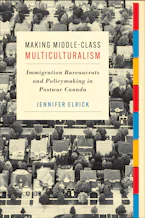
Honourable Mention distinction goes to Jennifer Elrick for her book Making Middle-Class Multiculturalism: Immigration Bureaucrats and Policymaking in Postwar Canada (University of Toronto Press, 2021).
In this book, Professor Elrick offers a fascinating and innovative account of the transformation of Canada’s postwar immigration regime. Highlighting the criticality of micro-level practices to policy outcomes, she explores the key role played by immigration bureaucrats in developing and promoting Canada’s unique skills-based model, one that created a form of “middle-class multiculturalism”. This book based on extensive archival research leads us to rethink both the origin and the consequences of Canada’s immigration policies.
2021 Winner
Jean-François Godbout, Lost on Division: Party Unity in the Canadian Parliament, University of Toronto Press, 2020.
Professor Godbout’s book examines how Canadian party unity has increased over time and attempts to solve the puzzle of why this has occurred. It is an impressive undertaking – not least because of the significant amount of data he collected for writing the book. Analyzing over two million individual votes in the House of Commons and the Senate (representing the “outcome of every single recorded vote” between 1867 and 2015), Godbout convincingly argues for the role more restrictive parliamentary rules played in changing the content of the legislative agenda and ultimately increasing party discipline. And he analyzes the impact this increased partisanship has had on the party system more broadly. It is difficult to do the book justice, with its rich historical and quantitative analysis, in the space provided here. The committee was unanimous in its enthusiasm for this project and its respect for the data collection involved. It is confident this book will contribute significantly to scholars’ understandings of party development and party systems both in Canada and comparatively.
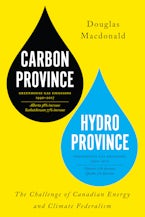
Honourable Mention distinction goes to Douglas Macdonald for his book Carbon Province, Hydro Province: The Challenge of Canadian Energy and Climate Federalism (University of Toronto Press, 2020).
Focused on an incredibly important and timely topic, Professor Macdonald’s book examines the failures of Canada to meet its climate change targets and the challenges that make for that failure. His analysis provides great insights and he suggests recommendations for a more successful future. This book is a great testament to the late professor’s scholarship and his contributions to the field.
2020 Winner
Carolyn Tuohy, Remaking Policy: Scale, Pace, and Political Strategy in Health Care Reform, University of Toronto Press, 2018.
Professor Tuohy’s book examines how political leaders in Canada, the Netherlands, the UK, and the US have advanced health care policy change based upon the relative environments for policy change and the proposed magnitude of those changes. This magisterial book is a landmark in its field, and provides a treasure trove of empirical insights across the four countries with clearly drawn lessons for policy change.
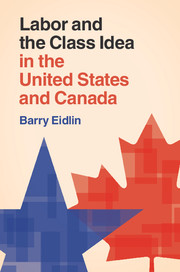
Honourable Mention distinctions go to Barry Eidlin for his book Labor and the Class Idea in the United States and Canada (Cambridge University Press, 2018) and to Megan Gaucher for her book A Family Matter: Citizenship, Conjugal Relationships, and Canadian Immigration Policy (University of British Columbia Press, 2018).

Professor Eidlin’s book traces the evolution of labour policy in Canada and the US and accounts for the higher labour union density in Canada versus the US, in a comparison that evokes the style of Seymour Martin Lipset himself, yet with a surprising result running counter to Lipset’s conclusions.
Professor Gaucher’s book presents in an innovative and thoughtful manner Canadian immigration policy from the perspective of the family, including how the family is defined in a restrictive manner for immigration purposes, with consequential results.
2019 Co-winners
Paul Saurette and Kelly Gordon, The Changing Voice of the Anti-Abortion Movement: The Rise of the “Pro-Woman” Rhetoric in Canada and the United States, University of Toronto Press, 2015.
Richard Johnston, The Canadian Party System: An Analytic History, University of British Columbia Press, 2017.
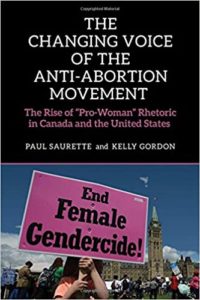
Today, anti-abortion activism increasingly presents itself as “pro-women”: using female spokespersons, adopting medical and scientific language to claim that abortion harms women, and employing a wide range of more subtle framing and narrative rhetorical tactics that use traditionally progressive themes to present the anti-abortion position as more feminist than pro-choice feminism.
Following a succinct but comprehensive overview of the two-hundred year history of North American debate and legislation on abortion, Saurette and Gordon present the results of their systematic, five-year quantitative and qualitative discourse analysis, supplemented by extensive first-person observations, and outline the implications that flow from these findings. Their discoveries are a challenge to our current assumptions about the abortion debate today, and their conclusions will be compelling for both scholars and activists alike.
To quote the Lipset Committee: “This book is a brave and deep study with careful and thoughtful composition between Canada and the United States on the issue of abortion, with particular focus on the anti-abortion movements in both countries. The book is exceptionally well written and demonstrates the capacity of comparative research to advance our knowledge on a complex topic.“
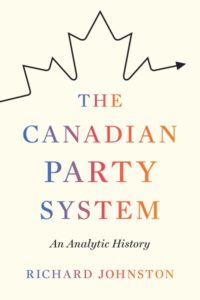
In this political science tour de force, Richard Johnston makes sense of the Canadian party system. With a keen eye for history and deft use of recently developed analytic tools, he articulates a series of propositions underpinning the system. Chief among them was domination by the centrist Liberals, stemming from their grip on Quebec, which blocked both the Conservatives and the NDP. As Johnston shows, the Conservative Party could win only with short-lived coalitions of francophobes and nationalist francophones, often built by soaking up populist tension. Moving beyond the national realm, he also takes a close look at the stunning discontinuity between federal and provincial arenas, another peculiarity of the Canadian system.
For its combination of historical breadth and data-intensive rigour, The Canadian Party System is a rare achievement. Its findings shed light on the main puzzles of the Canadian case, while contesting the received wisdom of the comparative study of parties, elections, and electoral systems elsewhere.
To quote the Lipset Committee: “This is a must-read book, a comprehensive and methodologically sophisticated treatment of political party development in Canada. The book is filled with conclusions about parties in Canada that will be industry-standard for some time to come.“
 2018 Winner
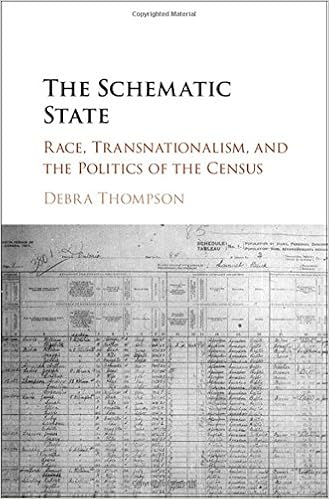
Debra Thompson, The Schematic State: Race, Transnationalism, and the Politics of the Census, Cambridge University Press, 2016.
By examining the political development of racial classifications on the national censuses of the United States, Canada, and Great Britain, The Schematic State maps the changing nature of the census from an instrument historically used to manage and control racial populations to its contemporary purpose as an important source of statistical information, employed to monitor and rectify racial discrimination. Through a careful comparative analysis of nearly two hundred years of census taking, it demonstrates that changes in racial schemas are driven by the interactions among shifting transnational ideas about race, the ways they are tempered and translated by nationally distinct racial projects, and the configuration of political institutions involved in the design and execution of census policy. This book argues that states seek to make their populations racially legible, turning the fluid and politically contested substance of race into stable, identifiable categories to be used as the basis of law and policy.
To quote the Lipset Committee: “We were particularly impressed with the theoretical novelty of proposing the schematic state as a construct, exemplifying it with rich detail derived from archival research and interviewing, and covering three countries’ historical and contemporary use of the census with a thoughtful and fair comparative treatment.“
 2017 Winner
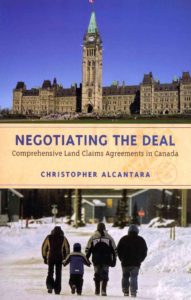
Christopher Alcantara, Negotiating the Deal: Comprehensive Land Claims Agreements in Canada, Toronto: University of Toronto Press, 2013
To quote the Lipset committee: “This work was viewed, as one committee member put it, as offering “a significant contribution in our theoretical and practical understanding of why some treaty negotiations succeed and others fail.” Moreover, the four diverse case studies of First Nations people (two from Newfoundland and Labrador and two from the Yukon Territory) are carefully done, using a variety of resource materials, including numerous interviews with those involved in the negotiating process. The use of the comparative method throughout the volume provides an important systematic dimension to the analysis as Alcantara identifies the key factors across these cases for success or failure of treaty negotiations. In all, this volume “should be essential reading for scholars and practitioners” for those seeking to understand relations between Aboriginal and non-Aboriginal communities. Moreover, the central findings may well be applicable to other nations seeking to address land and resource claims of indigenous communities.”
2016 No book awarded
 2015 Winner
Patrick Fournier, Henk van der Kolk, R. Kenneth Carty, Andre Blais, and Jonathon Rose for their 2011 Oxford University Press book, When Citizens Decide: Lessons from Citizen Assemblies on Electoral Reform.
This book describes and analyzes the outcomes of an unprecedented set of democratic experiments of relevance to the entire democratic world. It provides the reader with a comprehensive account of all citizen assemblies.
 2014 Winner
Royce Koop (University of Manitoba), Grassroots Liberals: Organizing for Local and National Politics, University of British Columbia Press, 2011.
Based on personal observations in cross-country ridings and interviews with grassroots activists, Grassroots Liberals reveals that Liberals are negotiating the limitations of federalism and multi-level politics, on the one hand, and distinct, geographically defined constituencies for provincial and federal politics, on the other. This insider’s view of Liberal party politics in Canada suggests that national parties can overcome the challenge of multi-level politics, strengthen their ties to provincial politics, and deepen their legitimacy by tapping the activism, energy, and support of constituency associations and local campaigns.
 2013 Winner
Stuart Soroka (University of Michigan) and Christopher Wlezein (University of Texas, Austin), Degrees of Democracy: Public Opinion and Policy, Cambridge University Press, 2010.
To quote the Lipset Committee: “This book presents a model of how public opinion both drives policy change, and adjusts to policy change across separate policy domains in United States, United Kingdom, and Canada. The comparative nature of the work yields a sophisticated synthesis of how behavioral and institutional features interact in these three different versions of representative democracy. It is among the very few genuinely comparative works on public opinion or political representation in which Canada plays a dominant role driving the analysis forward. Soroka and Wlezien have written an important book that has already had substantial impact. Driven by a big theoretical question, it is the sort of rigorous investigation of a few carefully chosen case-studies that Lipset himself might have carried out.”
 2012 Co-winners
Janet Ajzenstat (McMaster), The Canadian Founding: John Locke and Parliament, McGill-Queens University Press, 2007.
Stephen Clarkson (University of Toronto), Does North America Exist? After NAFTA and 9/11, University of Toronto Press, 2008.
2011 Winner
Mildred A. Schwartz, Party Movements in the United States and Canada, Rowman and Littlefield, 2006.
Party movements can be described as political organizations that both participate in the electoral process and have social movement qualities. They appear frequently in both Canada and the United States. Many of these movements face huge organizational problems, and yet they display remarkable resilience, signaling both continuing political dissatisfactions as well as possibilities for changing political outcomes. This book demonstrates how organizational theory can be useful for understanding party movements, and also expands on the idea of continuity, contributing new ways of thinking about how organizations change and survive in the face of recurring dilemmas. This look inside party movements, at the organizational problems they face and the strategies employed to deal with them, represents a new way of accounting for their history that contrasts with perspectives focusing solely on external conditions.