Bruno Castanho Silva, Fabian G. Neuner, and Christopher Wratil
As populists celebrate electoral successes across the globe, researchers have been debating what causes people to vote for these populist parties and candidates. One line of argumentation places heavy emphasis on the role of the public’s populist attitudes. According to this view, citizens with a populist view of politics are more likely to support populist candidates. Populism is often referred to as a “thin-ideology”, combining people-centrism, anti-elitism, and anti-pluralism. In simplified terms, politicians are classified as populist if they rail against evil elites and argue that the will of the common people is the only goal of politics. Citizens who agree that politics works this way are said to hold populist attitudes. However, such appeals can be combined with a range of host ideologies that span the ideological spectrum (e.g., anti-immigration or pro-redistribution appeals). The other possible explanation for populists’ electoral support thus contends that these ideological positions are what drives voters to populist candidates, rather than the “thin” ideological components of populist attitudes.
In a recent article, Neuner and Wratil (2022) leveraged conjoint experiments to test what populist or ideological factors drive support for candidates in Germany, both among populist and non-populist citizens. They find that while some populist appeals (e.g., defending citizens’ interests) increase support among the public, others (e.g., overthrowing the political elite) actually decrease support. Moreover, they show that “populist” voters are no more attracted to candidates with populist appeals than “non-populist” voters. They note, however, that these dynamics might differ from context to context and call for more examinations of which aspects of populist appeals actually attract voters.
Our study replicates their approach in the U.S. context. While featuring a different party and electoral system, it has recently received renewed attention due to the supposed populism of Donald Trump and Bernie Sanders. We kept most aspects as close as possible to the original study, changing a few appeals to match the American context, and embedded the conjoint experiment in a survey of 1,500 respondents, each of which evaluated five pairs of candidates with varying ideological and populist/non-populist characteristics.
The results can be seen in Figure 1. It shows the probability that a candidate will be preferred given each attribute. Estimates to the right of the dashed line suggest that a candidate who has that appeal garners increased electoral support whereas estimates to the left suggest that holding that position or priority decreases support for a candidate. Our results suggest that some “thin” populist priorities increase support (e.g., fighting political corruption, defending citizens’ interests) whereas others have no discernible effect. In terms of host ideology, Americans are drawn to politicians who call for taxing the rich and support military isolationism.
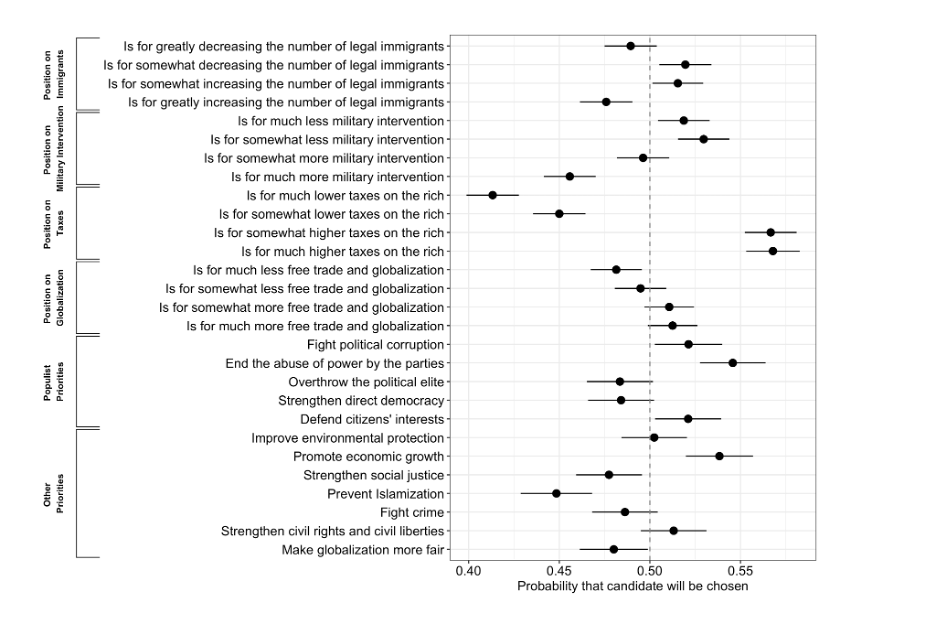
Figure 1: Marginal Means of Attribute Levels.
Naturally, while the appeal of populism might be mixed among the general public, the expectation is that a candidate espousing populist priorities would be particularly attractive to voters who hold populist attitudes. This, however, is not the case. Much like in Germany, both “populist” voters (i.e. those with high scores on the populist attitudes scale) and “non-populists” (those with low scores) react to these appeals in the same way, suggesting that populist voters are not uniquely mobilized by populist appeals. We also examine whether Democrats and Republicans respond differently to these appeals and while we, unsurprisingly, find that partisans are differentially receptive to ideological concerns (e.g., taxation or immigration), once again there is no evidence that the effect of “thin” populist appeals differs by partisanship.
In conclusion, our replication of Neuner and Wratil (2022) echoes two of their core findings: First, “populist” voters are not more swayed by populist appeals than the general public, thus suggesting that the role of these attitudes in driving populist voting may be overstated. Populist citizens still pick their candidates based on their ideology, not populism. Second, by showing that a slightly different set of populist appeals garners support in the U.S. compared to Germany, our study reveals that more attention needs to be paid to which specific components of populists’ ideology are responsible for their success across the globe.