Plenary Bios
Plenary: Political Science under Pressure
Dr. Paul Musgrave
Georgetown University Qatar
Paul Musgrave researches the intersection of foreign policy and international relations theory. He is the author of numerous articles in leading journals such as International Organization, International Studies Quarterly, Comparative Political Studies, Foreign Policy Analysis, and International Theory.
He currently focuses on how the public of the United States and other countries evaluates foreign policy strategies such as economic sanctions, tripwire force deployments, regulating foreign social media platforms, and intervening in other countries’ elections.

In addition, he is studying how sub-national governments, such as U.S. state and local governments, take part in international relations.
He has written for the Washington Post, Foreign Policy, and Slate. He has appeared on CNN, CNBC, ABC (Australia), CBC, MSNBC, and Al-Jazeera (Arabic and International). Among his popular works are investigations into Mikhail Gorbachev’s Pizza Hut commercial and how Pepsi briefly owned a Soviet fleet.
Musgrave is chair of the International Politics curricular group and Associate Professor of Government at Georgetown University in Qatar. Before joining GU-Q, he was an Associate Professor of Political Science at the University of Massachusetts Amherst. During 2019-2020, he was an American Political Science Association Congressional Fellow. He received his PhD in Government from Georgetown University. Read more »
Plenary: Possibility and Partnership in Political Science:
Charting a Path Forward
Dr. Helen Chang
Hostos Community College (CUNY)
Helen Chang has a PhD in political science from the Graduate Center of the City University of New York, with a focus on comparative politics and international relations. Dr. Chang is a political scientist with research interests in election rules and reforms, the intersection of social-technical systems in election administration, migration patterns and generational variations in voting behavior and preferences, and teaching and learning on political science. She is currently studying factors that increase the effectiveness of electoral management bodies.

Dr. Josh Gellers
University of North Florida
Joshua C. Gellers, PhD, LEED Green Associate, is Dean of Professional and Lifelong Learning and Inaugural Faculty Fellow for Artificial Intelligence at the University of North Florida. He is also a Research Fellow of the Earth System Governance Project, Expert with the Global AI Ethics Institute, and Fulbright Scholar to Sri Lanka. His research, which focuses on environmental governance, rights, and technology, has been published in numerous peer-reviewed journals and cited in high-level UN and EU reports. Dr. Gellers is the author of The Global Emergence of Constitutional Environmental Rights (Routledge, 2017) and Rights for Robots: Artificial Intelligence, Animal, and Environmental Law (Routledge, 2020). Read more »

Dr. Robert Lieberman
Johns Hopkins University
Robert Lieberman is Krieger-Eisenhower Professor of Political Science at Johns Hopkins University. He studies American political development, race and American politics, and public policy. He has also written extensively about the development of American democracy and the links between American and comparative politics. His most recent book is Four Threats: The Recurring Crises of American Democracy (St. Martin’s Press, 2020), co-authored with Suzanne Mettler. His first book, Shifting the Color Line: Race and the American Welfare State (Harvard University Press, 1998), won the Social Science History Association Presidential Book Award, the Thomas J. Wilson Prize of Harvard University Press, and Columbia University’s Lionel Trilling Award.
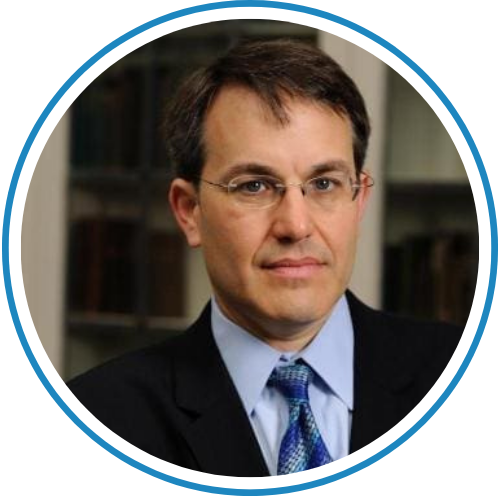
Shaping Race Policy: The United States in Comparative Perspective (Princeton University Press, 2005) was awarded the Best Book Prize by the Race, Ethnicity, and Politics Section of the American Political Science Association. He is also the co-editor of Democratization in America: A Comparative-Historical Analysis (Johns Hopkins University Press, 2009), Beyond Discrimination: Racial Inequality in a Postracist Era (Russell Sage Foundation, 2013), and The Oxford Handbook of American Political Development (Oxford University Press, 2016). Read more »
Dr. J. Cherie Strachan
University of Akron
J. Cherie Strachan, who received her PhD in 2000 from the State University of New York at Albany, is Professor of Political Science at the University of Akron. She is also Director of the Ray C. Bliss Institute of Applied Politics, which is dedicated to preparing students for professional political careers in addition to promoting public-spirited civic and political participation among the broader electorate. Her political science research combines interests in political participation, voluntary civic and political organizations, and political communication.

Dr. Strachan’s recent work explores the #MeToo movement and women’s political ambition, as well as the effects of partisan polarization, rudeness, and civility on political engagement. Her applied research on campus civic engagement pedagogy focuses on facilitating student-led deliberative discussions sessions, on enhancing the political socialization that occurs within campus student organizations, and on increasing scholarly rigor through multi-campus collaboration and data collection.
In addition to authoring and co-editing several books, Dr. Strachan has published more than 40 articles and book chapters. She currently serves on advisory boards for national organizations focused on improving the health of American democracy, including the National Issue Forum Institute (NIFI) and Unify Akron, a local affiliate of Unify America. Her public service extends to the American Political Science Association (APSA), where she serves as a member of the Executive Committee, Chair of the Teaching and Learning Program Committee, and Vice Chair of the Political Science Education Section. She recently received this section’s Distinguished Service Award for her role in helping to launch APSA’s Political Science Pedagogy Certification initiative, designed to provide professional development and credentialing opportunities for teacher-scholars in the discipline.