Research Group Workshops

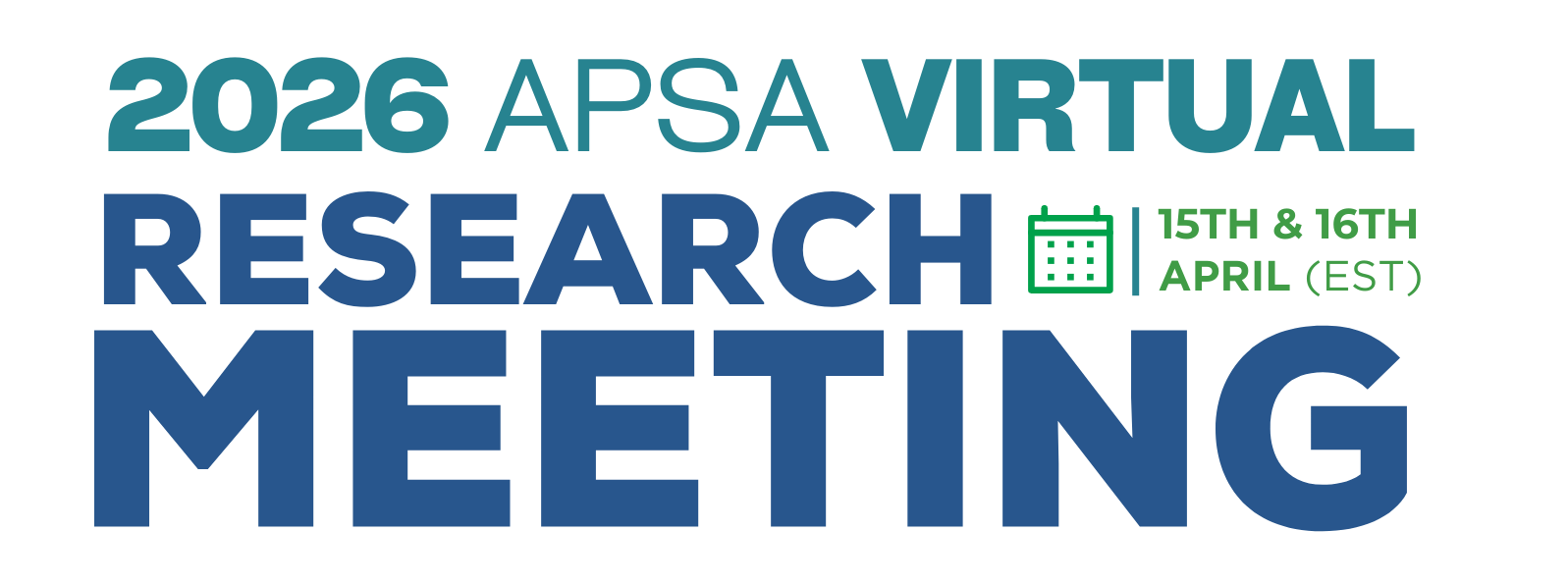
2026 APSA Virtual Research Meeting
Research Group Participant Applications Now Open | CLOSED
Deadline: Wednesday, February 25, 2026, at 11:59 p.m. Pacific.
View Research Group Workshops here
‣ What Are Research Group Workshops?
APSA’s virtual Research Group workshops are designed as a series of non-traditional sessions that aim to foster connections, encourage collaborative brainstorming on future research projects, and facilitate discussion and feedback on shared ideas. These engaging workshop sessions provide opportunities for participants to work together with a focus on generating future political science research and tangible outcomes, such as publications, grants, programs, and more.
Research Groups offer greater flexibility and creativity in their structure compared to traditional paper panels or roundtables. Examples of innovative workshop activities from previous virtual meetings include, but are not limited to:
- Presenting draft research papers or chapters intended for an edited volume, coauthored research book, or special journal issue.
- Collaborating on data collection or conducting business meetings for an ongoing research project.
- Dedicating time to building partnerships with policymakers, NGOs, and practitioners involved in applied policy and outreach programs.
- Brainstorming a shared curricula and pedagogy for teaching emerging or interdisciplinary topic areas.
- Developing a grant application to secure funding for a future collaborative research project.
Each Research Group consists of the organizer(s), who develops and facilitates the workshop sessions, and approximately 10-30 participants, though group size may vary depending on the topic. Each group will meet for eight dedicated 90-minute sessions over two days (a total of twelve hours), providing time for focused discussions, presentations, and in-depth feedback on the workshop’s subject. If approved by the organizer(s), a Research Group may also have discussants or non-participant observers.
APSA staff will provide logistical support for the virtual workshops, assisting with session organization, participant communications, social media promotion, virtual platform setup, technical management during the event, and other related tasks.
‣ Research Group Organizer Responsibilities & Goals
When designing workshop sessions, organizers should keep the following Research Group goals in mind:
- Creating opportunities for participants to share current papers, research, and other projects.
- Facilitating constructive feedback and active engagement among all participants.
- Encouraging collaboration on existing or future research initiatives.
- Promoting professional network development to strengthen participants’ research connections.
- Providing support and mentorship to graduate students and early career scholars in the group.
To accomplish these goals, Research Group organizers are expected to fulfill the following responsibilities before and during the virtual meeting:
- Developing the topic, description, structure, and content of the Research Group and each workshop session in alignment with the above goals.
- Reviewing candidate applications and selecting workshop participants.
- Creating an inclusive and welcoming environment for all participants.
- Leading the workshop sessions, moderating presentations, and facilitating discussions on Zoom.
- Encouraging collaboration and networking among participants, providing comments, feedback, and assistance as needed.
‣ Examples of Previous Research Group Topics
Proposed Research Group topics should aim to complement the overall meeting theme. For example, the inaugural 2024 virtual meeting theme, “Challenges in Political Science,” inspired workshops focused on political science topics such as:
- Empirical Studies of Civic Engagement and Civic Education
- Gender Equality Policies and Politics in the Post-Pandemic Recovery
- Progress, Pitfalls, and Promises of Political Science in Migration and Citizenship Research
- Religion and Democracy: New Research Frontiers
- The Race, Ethnicity, and Politics Research Group
- Traumatized Nationalism and Its Effects on Democracy
Similarly, under the theme “Political Science Research in a Virtual World,” the 2025 Virtual Research Meeting featured workshops including:
- Advancing the Use of Computational Tools in Political Science
- Decolonizing Theory and Methods Teaching in the Political and Social Sciences
- International Politics of AI: Navigating Transformative Technologies, Arms Races, and Wars
- Rethinking the Undergraduate Political Science Major in Challenging Times
- Survey Research in Authoritarian States
- The State of the Field of Political Science Education
- Working with Concepts: Core Contributions and Future Directions
‣ Submitting a Proposal to Host a Research Group
Organizers are required to submit a proposal for their Research Group through the submission system. Each proposal should include the Research Group’s title/topic, a brief description, and a general outline of the anticipated content, structure, and goals. Proposed topics should align with the 2026 meeting theme of “Collaboration in Times of Crisis: Polarization, Populism, and Political Science in a Changing World.” See the section on Research Group Proposal Guidelines below for more details.
Submissions will be accepted from December 15, 2025 – January 15, 2026, at 11:59 p.m. Pacific.
‣ Research Group Proposal Submission Guidelines
The goal of Research Groups at the virtual meeting is to provide a platform for innovative and collaborative sessions that promote valuable discussions, networking, and research advancement. When submitting a proposal to host a Research Group, consider the following recommendations:
- Describe your Research Group’s topic and how it connects to this year’s virtual meeting theme, “Collaboration in Times of Crisis: Polarization, Populism, and Political Science in a Changing World.”
- Outline the general objectives of your Research Group. These should align with the overarching goals of fostering discussions, building networks, and advancing research.
- Explain your planned session format or propose potential session formats. These should include opportunities for participants to present and discuss research, exchange feedback, and engage in discussions related to the group’s topic through group sessions, breakout groups, or one-on-one interactions.
- Highlight potential outputs or broader impacts on political science you hope to achieve. Examples may include producing publications like a special journal issue, coordinating future research collaborations, advancing grant proposals, or developing practical tools or frameworks for political scientists.
‣ Research Group Participant Applications
The 2026 Virtual Research Meeting will feature Research Group workshops on a range of topics open to applicants. Each Research Group will meet for eight 90-minute sessions across two days (four sessions per day, totaling twelve hours). All Research Group participants are expected to attend the full series workshop sessions across both days or communicate any planned absences to both APSA and the organizers in advance.
Due to limited capacity and overlapping session times, participants may only join one Research Group workshop.
‣ Participant Application Guidelines
To participate, candidates must apply through the All Academic submission system and be accepted by the organizer(s). The submission system will open for workshop participant applications in early February 2026.
Applicants should select one Research Group workshop and submit a Statement of Interest tailored to that topic. There is no word or character limit for the Statement of Interest. Your Statement of Interest should include relevant details about why you are applying, such as:
- Current or prospective research projects related to the workshop’s topic.
- A brief research abstract or summary of the applicant’s work.
- How participation aligns with their professional or academic goals.
- How the applicant hopes to contribute to and benefit from networking opportunities, group feedback, and collaborative research design.
Those interested should review the Research Group descriptions carefully prior to applying, as some workshops may request specific information in their application.
- The deadline for workshop participation applications is Wednesday, February 25, 2026, at 11:59 p.m. Pacific. APSA will send email notifications to applicants regarding acceptance decisions in early March 2026.
For more information, please review the Research Group Applicant Overview, which outlines workshop structure, application guidelines, and participation expectations for APSA’s virtual Research Groups.