2022 Spring Centennial Center Research Grant Winners
The American Political Science Association has awarded $41,462 in Spring Centennial Center Research Grants to seventeen research projects. These seventeen winning projects were selected from a highly competitive field of seventy applications with the assistance of a panel of fifteen APSA members who volunteered to serve as judges.
APSA’s Spring Centennial Center Research Grants are awarded each year to political scientists in non-tenure track or contingent positions, faculty located in departments that do not grant PhDs, and to graduate students in Political Science. “We recognize that not all of our members have equal access to research funding through their institutions, and we are proud to be able to offer these grants to help those members engage in exciting research that they otherwise may not have been able to afford to do,” said Dr. Sean Delehanty, the Associate Director of the Centennial Center for Political Science and Public Affairs, who manages the Spring Centennial Center Research Grants program.
The seventeen projects selected for these grants encompass work from all subfields of political science, dealing with subjects as diverse as American electoral politics, environmental refuges in India and Romania, economic sanctions, and the political writings of the acclaimed playwright, Loraine Hansberry. Each project team has provided an abstract that summarizes the work they will be carrying out as well as the names and photographs of individual project members. APSA is proud to support this work and wishes to offer each of these scholars a well-deserved congratulations.
Lorraine Hansberry’s Political Imagination
 PI: Lisa Beard, Assistant Professor, Western Washington University
Grant Amount: $2,102
Project Abstract: Though most often remembered for her playwriting, Lorraine Hansberry also critically theorized the political conditions of her era through her incisive nonfiction writing and public commentary. Her writings, activism, and interviews on race, gender, class, and colonialism constitute a powerful well for the study of power and political change. This project turns to the archive of Hansberry’s nonfiction writings and public commentary to trace how her work demands a rethinking of core premises in the field of political science and how she maps and claims a wider set of possibilities for political relationships and imaginaries.
How the South was won and lost (and could be won again): Moderate Democratic Senators and Minority Support in the South
 PI: Neil Chaturvedi, Associate Professor, California State Polytechnic University, Pomona
Grant Amount: $2,500
Project Abstract: This proposal seeks to examine how moderate Democrats lost the South in the 2010s after making significant gains in the Senate in the 1990s and early 2000s. Political scientists and keen political observers would agree that these centrist Democrats were primed to be pivotal players in the legislative game and by extension, should be able to control legislative outcomes and be the proverbial powerbrokers of the Senate (Krehbiel 1996, 1998; Brady and Volden 1996). Furthermore, demographic changes during this period should have similarly yielded friendlier constituencies for Democrats in which Black, Hispanic, and Asian American voters grew in all but one state in the South. Despite these insider and outsider advantages, few Democrats remain representing the South in the Senate. I hypothesize that voter suppression efforts like voter identification laws, limitations and reductions in early and absentee voting, and the reduction of polling places adversely impacted minority turnout in the South. Furthermore, moderate Southern Democrats fearing racial backlash amongst white voters, failed to build racially diverse electoral coalitions leaving minority voters underrepresented in the South.
In Defense of Women: Examining the Medical-Scientific Strategies of Anti-Gender Leaders in the United States

PIs: Elizabeth Corredor, Ryerson University, Post-Doctoral Research Fellow (Lead PI); Hannah Troxel, Rutgers University, PhD Candidate
Grant Amount: $1,860
Project Abstract: Anti-genderism is a global phenomenon that aims to prevent and/or reverse expanding gender and LGBTQ+ rights by attacking policy that understands ‘gender’ to be a social construct. The bulk existing scholarship has largely focused on Europe and Latin America, while there has been scant attention paid to the U.S. This project examines the discursive strategies of three U.S.-based anti-gender movement leaders that employ gender ideology rhetoric: The Heritage Foundation; the American College of Pediatricians; and the Catholic Church. We discuss three aspects that render anti-genderism in the U.S. unique. First, unlike the populist-style mobilization of its European and Latin American sister campaigns, U.S. anti-gender leaders leverage professional venues where they engage in medical-scientific debates around ‘gender ideology.’ Second, leaders blur the line between scientific knowledge and religious belief by capitalizing on medical debates and the historical connections between the moral authority of the medical profession and that of the Church. Third, anti-gender discourse in the U.S. is primarily centered on issues of gender dysphoria and transitioning processes. Embedded in their discourse are frames about ethics of care and the principle of ‘first, do no harm’ and the defense of motherhood and violence against women. Ultimately, medical-scientific speak allows U.S. anti-gender leaders to articulate their paternalistic religious ideas in a way that elevates “protecting women” to both moral and medical importance.
Who Leaves, Who Stays: Gender, Mobility and Environmental Changes in India and Romania
 PI: Cristina-Ioana Dragomir, Clinical Assistant Professor, New York University, Global Liberal Studies
Grant Amount: $2,500
Project Abstract: Twenty years ago, United Nations declared that natural disasters have a disproportionate impact on women. When communities are hit, many are forced to move. But often, the most marginalized members, especially women and girls, are not able to leave, and face multiple crises: environmental, sexual violence and exploitation. This project interrogates the intersection between environmental changes/catastrophes, gender and mobility. It looks at who moves, who stays, how are decisions made, and how they impact women and girls. Specifically, it seeks to answer: how are women from marginalized communities, like the Roma (Romania) and Adivasi (India), impacted by both environmental disasters and patterns of mobility?
To address this, I initiated a feasibility study in Roșia Montană, Romania and Tamil Nadu (Cauvery Delta)/West Bengal (Ghoramore), India where environmental challenges (floods and soil degradation) have been connected to poverty increase, farmers’ suicide and migration. However, to date, we have limited gender desegregated data of these phenomena. Similarly, although questions of gender rights have been articulated from many perspectives, rarely are they presented alongside joint imperatives of environmental challenges, with a focus on protecting women and girls, and their freedom of movement (or staying). I envision this work as a part of a large research project designing a risk-informed, gender sensitive platform, applying and analyzing vulnerability (individual sector and multisector), hazard exposure (individual-hazard and multihazard), and mobility/displacement data.
Are They in the Mood for Me? Inclusion Demands and Underrepresented Candidates Emergence
 PI: Iris E. Acquarone, PhD Candidate, Rice University
Grant Amount: $2,500
Project Abstract: Underrepresented candidates, such as women, racial and ethnic minorities, and young adults, are running for public office at a higher rate than ever before, at the same time that citizens are increasingly expressing discontent with the makeup of political elites, who are mostly middle-aged white men. Does the public mood for certain representatives influence the types of candidates that emerge? In particular, are underrepresented candidates more likely to run for office when the public is in the mood for them? I theorize a mood for the political inclusion of historically marginalized groups affects candidate emergence among these groups in two ways. First, it increases the political ambition of unambitious members of these groups; a precursor of the decision to run for office. Second, it makes already ambitious group members more likely to run for office. I will test these claims using survey experiments in the U.S. and the UK and causal mediation analysis. The findings will add new insights into whether and how public opinion can help overcome inequalities in access to political office.
Making Waves: How Party Insurgents Transform American Politics (Even When They Lose)
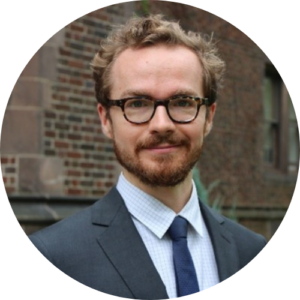 PI: Adam Hilton, Assistant Professor, Mount Holyoke College
Grant Amount: $2,500
Project Abstract: From the Tea Party to Donald Trump, Bernie Sanders to Alexandria Ocasio-Cortez and the rest of “the Squad” in Congress, American politics is being reshaped by party insurgents. And yet, despite their high profile, political scientists have not developed any systematic way of understanding the role these catalytic agents play in processes of political change. In my current research, I aim to fill this gap by undertaking a comprehensive book-length study of insurgent Democratic and Republican presidential candidates since World War II. Despite the fact that most insurgents fail to win their party’s nomination or the general election, I argue that they can still exert lasting influence on American politics. I theorize that insurgents change parties by “making waves”; that is, they leave in their wake enduring ideational and institutional dynamics that continue to ripple across the political landscape long after campaign season is over. When these dynamics continue to mobilize supporters and opponents, insurgencies have the capacity to disrupt order, stir up contention, and reshape partisan alliances.
Not all Unlawful Offences are Created Equal: How Citizens Think about General Crime and Gender-Based Violence
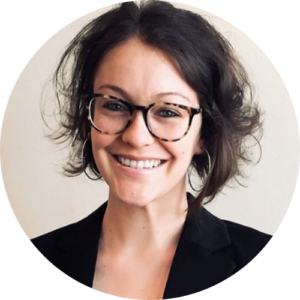 PI: Helen Rabello Kras, Assistant Professor, Regis University
Grant Amount: $2,500
Project Abstract: Helen Rabello Kras is an assistant professor of political science at Regis University in Denver, CO. Her broader research agenda explores public opinion and political behavior in Latin America, with a special focus on her home country Brazil. Her current research explores the effect of policies designed to combat gender-based violence on citizens’ political attitudes. Her research has been published in peer-reviewed journals, including Journal of Politics, Comparative Political Studies, and Latin American Politics and Society. Her current book project explores how people think differently about general crime (e.g., armed robbery, burglary) versus intimate partner violence and hold the government responsible for each. Intimate partner violence and general crimes have very dissimilar characteristics, such as the victim’s relationship to the aggressor and location of the crime. She argues that these differing characteristics matter for how citizens think about them and connect them to the state. To analyze these relationships, she is currently collecting experiments embedded in public opinion surveys from Brazil.
Blacklisted Rebels: Commitment to Child Rights in Armed Conflict
 PI: Minju Kwon, Assistant Professor, Chapman University
Grant Amount: $2,500
Project Abstract: Internal armed conflicts have involved various violations of child rights committed by non-state armed groups, including the recruitment, abduction, and sexual exploitation of children. Why do some rebel groups comply with international laws that prohibit child rights violations, whereas other rebel groups continue to violate child rights? My research project explores the conditions under which rebel groups commit to international humanitarian law, focusing on United Nations (UN) action plans for ending and preventing child rights violations. As part of the project, I examine why the Moro Islamic Liberation Front complied with its UN action plan, whereas other non-state armed groups in Mindanao of the Philippines continue their violence against children. As the first systematic mixed-method research on UN action plans, this project contributes to the literature on international institutions and conflict studies by analyzing when and why the UN’s “naming and shaming” increases non-state armed groups’ compliance with international humanitarian law. With the help of the Spring Centennial Center Research Grants, I plan to collect qualitative data from on-site interviews with stakeholders in Mindanao.
Territorial Work: State-Building in Turkey’s Margins
 PI: Dilan Okcuoglu, Postdoctoral Fellow, American University, School of International Service
Grant Amount: $2,500
Project Abstract: Following the civil war in Syria, Turkey has taken clear measures to maintain the border security with its neighboring countries: in 2018, the construction of a 764-kilometer wall along the borders between Turkey and Syria was completed. This new border wall project was also supported with high-tech surveillance systems. Despite that, the Turkish-Syrian borders were prone to violence. In the last decade, the Turkish state has also built several military bases and dams along the Kurdish-populated borders of Turkey, Iraq and Iran. The literature suggests that such increased state presence should help to curb political violence (Atzili 2010; Fearon and Laitin 2003; Kaldor 2013). Yet, armed conflict between the Kurdish rebels and the Turkish state is still ongoing, notwithstanding a few ceasefires. Why does increasing state presence fuel violence and conflict in some cases but not in others? Under what conditions does increased state capacity exacerbate ethnic conflict? By using interview data and archival research, I argue that forms of territorial control, which include nationalizing the landscape, securitization, border control, administrative and demographic control and expulsion shape people’s everyday experiences. These state practices engender minority grievances and perpetuate rebel violence by militarizing everyday life, fragmenting the group, violating democratic rights, facilitating the appropriation of cultural heritage and loss of property.
A Proposed Study of How Intersectional Politician Categories Affect how Anger Expressions are Perceived and Evaluated
 PI: Gregory A. Petrow, Assistant Professor, University of Texas at El Paso
Grant Amount: $2,500
Project Abstract: Scholars study the rise of so-called “outrage discourse,” finding that expressions of anger are becoming more commonplace in American politics. Additionally, political candidates from increasingly diverse backgrounds are running for elected office. The effects on voters of this diversity, however, are poorly understood, particularly as they relate to how political candidates express emotions. With this funding we will hire Anglo research participants to test to see how the effects of politicians expressing anger may vary according to how their gender and race cross with one another. It may well be the case that due to negative racial stereotypes and conceptions of traditional gender norms, political candidates who reflect greater diversity may be judged more harshly for expressing anger. The design experimentally manipulates if a politician is presented as a man or woman; as white, black or Latino; and, as expressing anger or not. The central hypothesis to be tested is that the white electorate penalizes politicians more for expressing anger when they are not white males
“Trading with Pariahs: The Failure of Economic Statecraft in a Weaponized Interdependent World”
PIs: Keith A. Preble, Independent Scholar; Charmaine N. Willis, PhD Candidate, SUNY Albany
Grant Amount: $2,500
Project Abstract: The United Nations 1718 Sanctions Committee has published biannual reports on the compliance of UN sanctions against North Korea (DPRK). These detailed reports underscore the difficulty faced by the UN member states in promoting and supporting compliance of economic sanctions. Our project will code and catalog North Korea’s sanctions evasion efforts detailed in these reports (and news media). We hope to ultimately create a data set of North Korea’s sanctions evasion and illicit activity, ranging from arms deals to countries in Africa to operating restaurants and art studios in Southeast Asia, which we will make available publicly at the conclusion of our project. These activities are important for understanding how North Korea continues to develop weapons of mass destruction despite major economic sanctions levied against it. The goal of our work is to map out North Korea’s network of illicit activities and compare how it compares to North Korea’s network of licit trade and foreign aid.
Coming Out to Vote: The Political Construction of Sexuality Discrimination
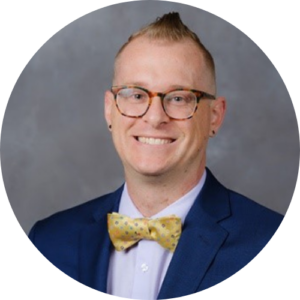 PI: Andrew Proctor, Assistant Professor, Wake Forest University
Grant Amount: $2,500
Project Abstract: This research examines how interactions between activists and political parties shapes the ways in which LGBT people think about themselves as part of a “collective us.” In particular, the book traces the formation and development of liberation, civil rights, and civil libertarian collective identities as competing frameworks used to construct a relationship between LGBT marginalization, partisanship, and the state. The project draws on theories of intersectionality and constitutive representation to demonstrate how the intersecting politics of sexuality, gender, and race within American political parties shapes collective identity and group formation. Using archival materials, I identify whether and how political parties represent collective identities when they interact with LGBT activists. In addition, I measure the prevalence of each collective identity among LGBT people at the mass-level. In the survey data, I examine the socio-demographic and political factors that predict whether someone is likely to identify with a liberation, civil rights, or civil libertarian collective identity. I then examine collective identities as predictors of attitudes about political parties, social movements, and public policies.
Policy Feedback in a Predominantly Hispanic Community in the US: How Government Food Assistance Affects Resources and Political Participation
 PI: Gregory Schober, Assistant Professor, University of Texas at El Paso
Grant Amount: $2,500
Project Abstract: The Supplemental Nutrition Assistance Program (SNAP)—formerly called Food Stamps—provides food benefits to people in need in the United States. During the COVID-19 pandemic, more people applied for and received SNAP benefits. An important question is whether SNAP encourages people to participate in politics. Does SNAP increase voting and other forms of political activity among recipients? Past research finds that some government programs increase political participation, but it is unclear if government programs boost political participation in Hispanic communities. I argue that SNAP increases the health of recipients, which in turn allows them to participate more in political activities. To analyze this argument, I am starting a new representative survey of adults in El Paso, Texas. Round 1 of the survey is being conducted in April/May 2022, and Round 2 will be implemented in April/May 2023. The project will improve our understanding of how policy affects political participation in a predominantly Hispanic community, and it will also help local government and nonprofit leaders identify urgent community needs.
The Logic of Authoritarian Reaction to Natural Disasters
 PI: Bann-Seng Tan, Assistant Professor, Ashoka University
Grant Amount: $2,500
Project Abstract: As the world becomes more authoritarian, we want to understand the nature of authoritarian resilience even if the normative goal is to break autocracies. I study the political imperatives of political regimes, especially democracy and autocracy, as manifested in different policy domains. In international conflict behaviour, one such reflection is the democratic peace or the idea democracies do not wage war against each other.
My current project studies the reaction of autocratic recipients toward offer of foreign aid relief in the aftermath of natural disasters. While natural disasters occur randomly, the reactions of states in their aftermath are distinctively political. I articulate a theory governing such political reactions. I argue authoritarian recipients choose their reaction toward foreign relief strategically. They may facilitate, obstruct or divert foreign relief. Their choice depends on the political relevance of the disaster victims and the need of the regime for performance legitimacy.
To test the theory, I am building an original dataset containing data on natural disasters, foreign aid, and regime characteristics. It is currently missing data on the policy responses of authoritarian regimes to natural disasters and towards foreign relief. A primary outcome of this project, therefore, is to collect, code and enter data on policy responses of states into a machine-readable format. This in turn facilitates subsequent statistical analysis.
This project helps donors anticipate the reactions of aid recipients and in doing so allow them to allocate humanitarian aid where they can do the most good.
Reworking Tradition: Women and Traditional Governance in Southern Africa
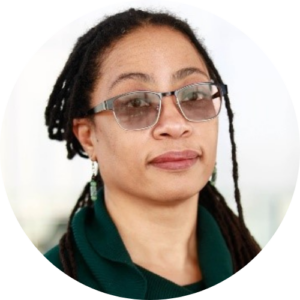 PI: Robin L. Turner, Associate Professor, Butler University
Grant Amount: $2,500
Project Abstract: Reworking Tradition analyzes the gendered politics of representation and traditional governance in southern African democracies, where monarchs, chiefs, clan leaders, and other traditional leaders preside over courts and meetings, mediate disputes, facilitate development, and sometimes allocate communal land and other collective resources. Their governance can reproduce, reform, or challenge norms and practices privileging men over women, elders over youth, and longtime community members over more recent arrivals. How do women chiefs and traditional councilors govern? Do these women leaders seek to represent women, and if, so, how? How have traditional community members responded to women’s governance? I use interviews with women traditional leaders and in women-led traditional communities to address these questions. This Centennial Center grant will underwrite a last round of field research in the North West province of South Africa focused on how women traditional leaders and their communities have navigated the coronavirus pandemic.
Moral Diffusion and Democratic Rights: An Examination of Support for Anti-democratic Leaders
PIs: Andrew Bloeser, Associate Professor, Allegheny College; Tarah Williams, Assistant Professor, Allegheny College
Grant Amount: $2,500
Project Abstract: In recent years, some elected officials have engaged in behavior that has threatened democracy, yet a substantial number of citizens continue to support them. Why are people willing to support leaders who would trample on democratic norms and processes? We argue that moral psychology’s concept of moral diffusion can help us understand this process. Moral diffusion suggests that people who are not willing to directly take harmful actions toward others are more willing to support those who would take such actions on their behalf. In politics, supporting a leader who would harm others allows voters to achieve an outcome they want without having to take responsibility for that outcome. We propose a series of experiments to test this hypothesis. Evidence corroborating this theory would indicate an inherent but overlooked problem of democratic representation, namely, that representation can facilitate actions that violate democratic principles while freeing citizens from feeling accountable.
 Andrew Bloeser, Allegheny College |
 Tarah Williams; Allegheny College |
Reconstructing Home: Abolition Democracy, the City, and Black Feminist Political Thought Revisited
 PI: Jasmine Yarish, Assistant Professor, University of the District of Columbia
Grant Amount: $2,500
Project Abstract: By returning to the intellectual contributions of six Black women to the unfolding of the first Reconstruction era in and beyond the city of Philadelphia between 1850 and 1880, this project aims to extend W.E.B. Du Bois’s theory of abolition democracy. They include Grace Mapps Douglass, Harriet Jacobs, Harriet Tubman, Frances Ellen Watkins Harper, Fanny Jackson Coppin, and Gertrude Bustill Mossell. The centrality of both free, enslaved, and formerly enslaved Black women in mobilizing abolitionist projects highlights that the failure of emancipation to usher in a more perfect union hinged on the domestic, municipal, and state enforcement of a political discourse centered on separate spheres (i.e., public/private divide). Attending to how these Black women negotiated the global trends of enclosure, industrialization, and urbanization, I find that the political concept of fugitivity that spurned the abolition of slavery retains theoretical and practical significance beyond the antebellum period as it complicates the liberal idea of “home” based in private property and facilitates the imagination of alternative institutions to secure the basic tenants of democracy – freedom, equality, and solidarity – through investments in the commons.