2022 Special Projects Fund Recipients
The American Political Science Association has awarded a total of $248,538 in Special Projects Fund grants to twelve projects. The thirty-two scholars who make up the twelve project teams collectively represent twenty-six institutions ranging from research universities to community colleges in eight different countries. Each of these projects seeks to push the Political Science discipline forward by advancing best practices in teaching and research ethics, supporting members of underrepresented groups who wish to join the profession, championing digital research methods, and creating partnerships between APSA and scholars across the globe. The strength of Political Science as a discipline has always been its diversity, both in terms of methods and approaches, as well as the people who make up the discipline. APSA is confident that these projects will continue to grow the discipline’s strength and we look forward to supporting the work these twelve teams will do to improve Political Science.
This announcement provides details for each of the twelve Special Projects Fund winners in the pages that follow. Each project team has provided an abstract that summarizes the work they will be carrying out as well as the names and photographs of individual project members. A table listing out the project announcements in order is on the next page, and we encourage you to learn more about each of these projects.
Congratulations to the 2022 Special Projects Fund recipients:
The Research Enterprise in the Middle East and North Africa: Ethics & Advising
How should doctoral students and early career scholars be sensitized to the ethical concerns that attend research in communities under duress—among refugees, in conflict zones or autocracies? Drawing on work underway by an interdisciplinary team of social scientists who work in and on the Middle East and North Africa (REMENA: https://www.mei.columbia.edu/remena-about ) as well as on APSA’s own MENA section and program, this project will hold two workshops to explore mechanisms to support Political Science faculty advisors in this effort. The first workshop, to be held in conjunction with the planned APSA-MENA conference in Jordan in July 2022, will engage political scientists associated with REMENA in exploring navigating ethical challenges in designing and conducting research with workshop participants. The second workshop, to be held at the 2022 APSA Annual Meeting in Montreal, will bring together PhD candidates anticipating or already conducting work on the Middle East with experienced faculty researchers and invited Directors of Graduate Studies to examine advising and mentoring processes that facilitate awareness of ethical obligations in research. Reports on the workshops will be published by the APSA-MENA newsletter, posted on the REMENA website and disseminated in the region through Al-Fanar, an online newsletter on higher education in the region.
Amount: $25,000
Team Members:


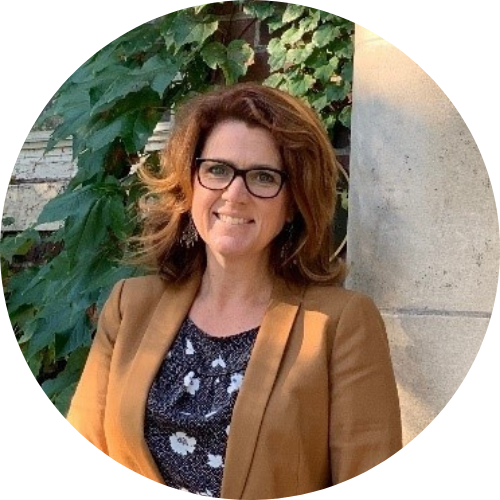
Just Telling It Like It Is: Descriptive Work and Social Science Research
What is the role of descriptive research in Social Science? How can description, either on its own or in complementing causal work, contribute to the aims of Political Science? For the past 60 years, descriptive work has been relegated to the sidelines of Political Science, yet it is a necessary component across sub-fields and crucial for qualitative and quantitative work in conceptualization, measurement, and theory-building.
We will host an iterated two-part workshop series that includes discussion and presentations on description as a method and a tool of social scientific inquiry. These conversations involve examining best practices for scholars across sub-fields and methods who employ descriptive work in their research. More broadly, we seek to expand the scope of participation in the conversation on the value and contributions of descriptive work, both on its own and in combination with causal inference.
Our proposed two workshops begin a discussion regarding the role and merits of descriptive work in Political Science with the intention of expanding that discussion through publications and a series of follow-up panels with APSA’s Political Methodology section
Amount: $25,000
Team Members:


Geopolitics of Knowledge in the Covid-19 Era: A Policy Window for Epistemic Tension and Self-Determination in Africa?
The Covid-19 pandemic is a critical juncture in how knowledge is created and disseminated globally with different implications and outcomes for different geographies. It provides an opportunity to question how knowledge is gained or lost on subjects and objects in different social and geopolitical spaces with focus on Africa as both a consumer and producer of knowledge. To be clear, emerging studies show that the Covid-19 pandemic and its dynamics have been a signpost of a distributive unfairness, inequality and discrimination in creating and disseminating epistemic goods. This conference therefore intends to explore the covid-19 era as both a moment of global epistemic tension and a powerful policy window for epistemic freedom. This tension is based on a plural temporality of knowledge and truth regimes articulating covid-19 to other health crisis and reflecting on the origins, the construction, and the circulations of knowledge. From a trans-disciplinary and interdisciplinary perspective, the geopolitics of knowledge creation, dissemination and acceptance can be explored around three key questions:
- What are the forms and expressions of global epistemic tensions in knowledge production around the Covid-19 pandemic?
- What are the terms and modalities of African epistemic resistance and how is it contributing in the dignifying of African knowledge?
- Is there any new distribution of the credibility economy?
The proposed AAPS 2023 biennial conference aims to bring together contributions from related disciplines with the intended outcome of an edited book volume.
Amount: $25,000
Team Members:


Georgetown Political Science Predoctoral Summer Institute and Washington-Area Political Science Predoctoral Summer Institute Consortium
The continued relevance of political science requires transforming the composition of the population of students pursuing doctorates in the discipline to include groups that are currently under-represented, thereby enabling the diversification of the professoriate. We will undertake two initiatives that will contribute to achieving those ends. First, we will launch a week-long “Georgetown University Political Science Predoctoral Summer Institute” (PS-PSI), to occur annually beginning in 2022. Each year, the PS-PSI will gather and train a diverse group of 20 rising juniors and seniors at area colleges and universities who aspire to pursue a doctorate in political science. Second, we will lay the groundwork for a Washington-Area Political Science Predoctoral Summer Institute Consortium (WAPS-PSIC), which will also support under-represented undergraduates who plan to pursue doctoral-level study. Nine universities in the Washington, DC area with doctoral programs in political science or closely related disciplines will serve as the anchor institutions for the consortium, working together to offer annually a coordinated set of PS-PSIs. By encouraging both the creation of new programs and coordination among them, our initiative will facilitate joint learning and complementary programming. More broadly, developing such a network holds the potential to empower generations of change agents who will ask new questions in new ways from different perspectives, and will inspire more under-represented students to pursue doctoral degrees themselves, accelerating disciplinary development and evolution.
Amount: $25,000
Team Members:


Expanding the Inclusivity and Outreach of the Digital Fieldwork Scholarly Network
Political scientists may have been pushed to learn the tools and techniques for digital fieldwork during the pandemic, but these methodologies are not new. Advances in information and communication technologies over the past two decades have made it possible to conduct digital fieldwork, where scholars collect and generate data and evidence using cellular or web-based technologies and platforms. Digital fieldwork offers many opportunities to expand diversity, equity and inclusion in the discipline but also presents new challenges. It is essential to facilitate a conversation about how to use these new data collection approaches in political science. With the APSA Special Projects Fund grant, we aim to increase the inclusivity of the Digital Fieldwork (DFW) website and scholarly network by reaching out to liberal arts colleges, smaller research universities, and applied political science organizations in the U.S. and Global South. We will expand research opportunities for undergraduate and graduate students who join our collaborative team. And we plan to broaden the disciplinary dialogue through new webinars, APSA meeting roundtables, and publications.
Amount: $15,500
Team Members:


Learning How to Play with the Machines
Learning How to Play with the Machines will increase visibility, scholarship, and communication between the fields of political and computer science. The project is organized around three major themes: Dialogue, Discovery, and Design.
The centerpiece of the Dialogue theme is a roundtable discussion series which will engage experts in both political and computational science from multiple universities across the United States. Participants will discuss the commonalities, divergences, and hopes for the two fields, tackling difficult topics such as the limits of automatic analysis and applications of big data.
The Discovery component includes two interdisciplinary case studies which will push the frontier of natural language processing in political science. One investigates changes in Hong Kong’s press freedom, and the other will investigate the signaling and legacy effects of the Beijing Olympic Games. These studies will create mentorship and student co-authorship opportunities to grow the next generation of computation-forward political scientists.
Ideas emerging from the roundtable discussions and the case studies will inform the Design of a methodological framework that will responsibly integrate computer science techniques into social science research questions. This project will spark informed discussions around complex topics, redirect research agendas, and nurture a new generation of scholars with cross-disciplinary talents.
Amount: $15,000
Team Members:
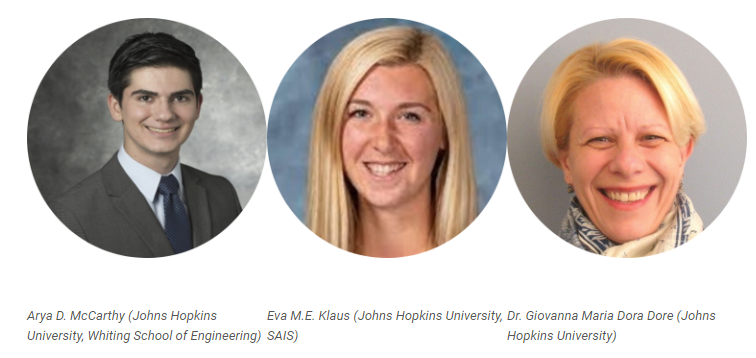
Fostering Global Research Networks among Junior International Political Economy and International Economics Scholars
Graduate Students in International Political Economy (GSIPE) is a virtual workshop and networking space organized by doctoral students from both political science and economics. Since summer 2020, GSIPE has fostered exchanges among hundreds of junior international political economy scholars worldwide. Recognizing the ongoing impacts of the pandemic, particularly on scholarly travel for international colleagues, GSIPE will use its APSA Special Projects funds to develop hybrid pre-conference programming for junior international political economy scholars. GSIPE will host hybrid pre-conference and social events at APSA 2022 and ASSA 2023 and will provide up to 10 travel or caregiving grants to GSIPE members who otherwise would be unable to attend due to lack of conference funding. We will also fund food and transportation for individuals to attend a GSIPE social event and hire an individual to provide live streaming support for these events. Together these hybrid events will improve GSIPE’s outreach and inclusion of junior political science and economics scholars’ research worldwide.
Amount: $10,000
Team Members


Mentored-Teaching Practicum: Collaborating to Improve Undergraduate Political Science Education
The Mentored-Teaching Practicum is a new collaboration between the Political Science Departments of the University of Houston and Rice University, and the Government Department of Houston Community College that offers advanced doctoral students a unique structured teaching and learning opportunity. The Mentor—an experienced college teacher—and select doctoral students will work together in the spring semester to learn about teaching today’s diverse learners and how course design and delivery can enhance student success. In this seminar participants will design an Introduction to American Government course based on effective teaching and learning practices, one that excites student interest by including cutting-edge political science research. During the summer semester participants will offer their courses as instructors-of-record for community college American Government classes (in person or online) while receiving structured feedback and support from the Mentor. Graduate student participants in the Mentored-Teaching Practicum will gain strong preparation for the academic job market as they develop a teaching and learning toolkit, create and implement an Introduction to American Government course, and acquire instructional experience with diverse student populations.
Amount: $20,820
Team Members:


Political Scientist Training Academy
Doctoral training in political science focuses heavily on research – collecting and analyzing data, delving into theories and literatures, and writing culminating in a dissertation. Yet, the professional life of an academic is about a much wider balance of tasks and skills: also teaching, administration, professional service, mentoring, public engagement, and more. In the PhD-by-research format that is common outside of North America, it remains rare that doctoral programs provide any formal (or even informal) training in much of what political scientists actually do on a daily basis in their careers. Moreover, while graduate training helps students develop their research skills and output, many students graduate with only a limited grasp of how to publish, let alone how to balance their independently motivated research and writing with the pressing demands of teaching and service. This balance is especially difficult to achieve in Southeast Asia, where university teaching and administrative service demands tend to be even higher and begin even earlier in one’s career than is common in North America, Europe, or Australia. This summer program will aim to address these gaps by developing knowledge and skills that will help PhD students, particularly nationals from Southeast Asia, transition to post-graduation academic careers. To facilitate access and network-building, the program will adopt a two-site hybrid structure: participants from the UK and Europe will take part at the University of Essex in England and participants from Asia and Australia at the National University of Singapore.
Amount: $25,000
Team Members:


The Expansions Initiative
The Expansions Initiative seeks to increase the diversity of the political methodology community and the field of political science. The goal of the initiative is to encourage undergraduate and master’s students from underrepresented minority groups to apply to political science PhD programs that emphasize quantitative methods. A cohort of 8 student fellows are invited to participate in the first summer session of the Inter-university Consortium for Political and Social Research (ICPSR) Summer Program. The Society for Political Methodology and the American Political Science Association cover the cost of tuition. At the end of their ICPSR Summer Program experience, Expansions Initiative fellows are paired with faculty mentors who collaborate with the fellows on original research projects. The Society for Political Methodology and the American Political Science Association provide $4,000 in funding to support this mentored research. The exposure to methods training and the research experiences with methods faculty are meant to solidify student interest in pursuing an academic career that emphasizes quantitative methodology; these experiences should also increase the likelihood that these master’s students and undergraduates succeed when they apply to political science PhD programs.
Amount: $25,000
Team Members:


Breaking the Barriers to Entry: Workshops and Support for Mid‐Career and First‐Generation Pre‐Graduates
The Breaking the Barriers to Entry project seeks to host mid-career and non-traditional pre-graduates in a virtual summer workshop with the aim of socializing students into political science graduate programs. Fourteen pre-graduates, selected through an application process, will participate in a fully-funded virtual workshop focusing on graduate-level writing and data analysis, and will be connected to a faculty mentor who will help with their applications, essays, and professional development. Students will also receive a new laptop and seminal textbooks to help them prepare for and offset the costs of their graduate studies.
Amount: $24,418
Team Members:


Scope Conditions Podcast
Scope Conditions is a popular academic podcast showcasing cutting-edge research by emerging scholars in the broad field of comparative politics. Hosted by political scientists Alan Jacobs and Yang-Yang Zhou, Scope Conditions ranges widely across themes, regions of the world, and historical periods. In each episode, we interview the author of a recent or forthcoming book or new article that advances the state of knowledge in an important way.
We ask our guests about both substance and method: what these scholars have found, and importantly, how they have found it. We talk with our guests about their motivation for pursuing the project; the argument that they advance; the research design and data-collection; the empirical findings; and the broad implications of those findings for public policy and for our understanding of the political world. Unlike existing academic podcasts, we do a deeper dive into the research process – the “aha” moments and bumps along the road.
When inviting guests, we look for diversity in topic as well as diversity in the scholars’ backgrounds. We are committed to using our platform as a way to highlight historically underrepresented voices. Scope Conditions’ intended audience includes researchers, educators, graduate and advanced undergraduate students, and policy practitioners with an interest in the social scientific study of politics around the world.
Amount: $12,800
Team Members:

