Since 2003, the Centennial Center for Political Science and Public Affairs has offered scholars a wide selection of funds that can be applied to the costs of research, including travel, interviews, access to archives, or costs for a research assistant. In order to provide additional support to our members during the current crisis, this year the Centennial Center is making research grants more flexible by expanding the categories of costs eligible for funding. Eligible costs now include: 1) Research costs associated with interviews and surveys, access to archives, and more 2) Salary support for PIs 3) Salary support for research assistants 4) Per diems regardless of location 5) Research software and hardware, including devices necessary for scholars with disabilities to conduct their research. We recognize that APSA members may have needs not included in the above list. If you have a cost that is not listed here, please contact us at centennial@apsanet.org. Grants typically range from $500-$1500 but funds can be requested in any amount up to $2500 maximum. The next application deadline will be in June 2021. Learn more and apply!
Bernard Tamas
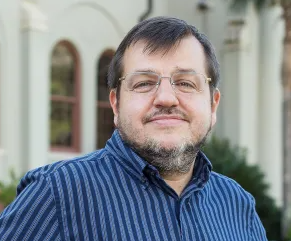 Bernard Tamas is associate professor of political science at Valdosta State University. He received funding from the Centennial Center Research Grants program for his project “Does Voter Suppression and Malapportionment Inflate Electoral Bias? A district-level analysis of US House elections.” Before joining Valdosta State University, Tamas was a postdoctoral fellow at Harvard University, a Fulbright scholar at the Central European University in Budapest, Hungary, and a visiting research scholar at Columbia University.
Dr. Tamas’ research interests are in the field of electoral systems with a focus on minor parties and electoral bias, especially in single-member district (SMD) electoral systems. His most recent book, “The Demise and Rebirth of American Third Parties” (Routledge 2018), provides an explanation for the decline of US third parties starting around 1920 and then their subsequent revival beginning in 1968. His current research focuses on the how single-member districts can produce various types of disproportionality, and why this bias poses a threat to democracy.
A recent article by Dr. Tamas demonstrated that single-member district electoral systems produce electoral bias for reasons far beyond gerrymandering. It also demonstrated that over the past century electoral bias in US House elections would have been large even if gerrymandering had been eliminated. Expanding on this argument, for his project funded jointly by the APSA Centennial Grant (Ostrom Fund) and the MIT Election Data and Science Lab, Dr. Tamas hypothesizes that any form of voter underrepresentation, whether voter suppression, malapportionment, or even simply sagging turnout, can increase electoral bias against the party that represents the underrepresented group, especially if that underrepresentation is in any way geographically concentrated. Effectively, this implies a “double whammy” for the underrepresented group, in which their representation in elected office is decreased both because they provide fewer votes and because this decrease in votes compounds itself through disproportionality that inflates the number of seats certain parties receive relative to their voter support. Dr. Tamas is preparing a journal article based on his findings from the APSA and MIT funded grants. Following this he plans to expand his research on electoral bias into a book about elections in Australia, Canada, India, the United Kingdom, and the United States over the past century and a half.
Dr. Tamas plans to build a publicly available electronic database of all district-level elections to the US House of Representatives from 1840 to 2018. This database will include data on every candidate who ran in a US House election during this period. It will be housed at the MIT Election Data and Science Lab, and will also be made publicly available via the Valdosta State University website. As a second phase of his project, Dr. Tamas plans to expand the dataset to also include information on all elections in Australia, Canada, India, and the United Kingdom, since 1867 (or whenever the country democratized).
Heath Brown
 Heath Brown is associate professor of public policy at the City University of New York, John Jay College of Criminal Justice and The Graduate Center, New York, NY. He received funding from the Centennial Center Research Grants program‘s Second Century Fund for his podcast “The Co-Authored Podcast: Disseminating How the Big Collaborations Happened.”
Dr. Brown’s research focuses on the intersection of politics and public policy as well as the role of money in politics. He is especially interested in how interest groups and nonprofits advocate for policy change and mobilize voters.
Dr. Brown used the APSA Centennial Center funding to launch a podcast series focused on collaboration in political science.
The first episodes of the Co-Authored podcast have focused on the collaborations of: Frank Baumgartner and Bryan Jones; Sidney Verba, Kay Schlozman, and Henry Brady; and the Collaborative Multiracial Post-Election Survey (CMPS).
The most recent Co-Authored episode focused on collaboration and loss, on the way collaboration in political science transpires during some of the most difficult times. The episode features three scholars. The first is Ken Sherrill, emeritus professor from Hunter College CUNY, who talks about his experiences during the AIDS crisis in the 1980s. The second, Dave Hopkins from Boston College, explains how he came to know Nelson Polsby and co-author a textbook with him. And the third, Julia Azari from Marquette University explains the loss of a good friend and co-author. Each shares deeply personal stories about how they’ve collaborated in the past and coped with loss and grief.
All of the Co-Authored episodes can be found here as well as on iTunes.
In addition to continuing the Co-Authored podcast, He is completing a book on the politics of homeschooling. The book, Homeschooling the Right, is to be published by Columbia University Press and is scheduled for publication in early 2021.
Mara Redlich Revkin
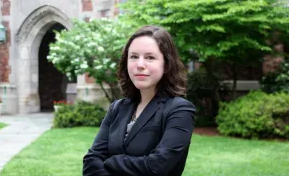 Mara Redlich Revkin is a post-doctoral fellow at Georgetown University Law Center. She received funding from the Centennial Center Research Grants Program’s Second Century Fund for her project “Can Community Policing Increase State Legitimacy After Conflict? Evidence from Iraq”
Dr. Revkin studies legal systems during and after conflict with a focus rule of law, transitional justice, and security sector reform in Iraq and Syria. She holds a J.D. from Yale Law School and a Ph.D. in Political Science from Yale University, where her dissertation examined civilian agency during rebel governance and its post-conflict consequences in the Islamic State in Iraq and Syria. She is currently based at The Georgetown University Law Center on a two-year postdoctoral fellowship, where she is continuing her research on police reform in Iraq and ongoing projects on transitional justice and rule of law in Iraq.
Dr. Revkin has conducted fieldwork in Iraq, Egypt, Turkey, Lebanon, and Oman using qualitative and quantitative research methods including large-scale household surveys, semi-structured interviews, and event data based on newspapers and social media posts. Her current research aims to contribute to the development of evidence-based strategies for strengthening rule of law and state legitimacy after war. She has served as the lead researcher on Iraq and Syria for United Nations University, the research wing of the UN system, for projects on the recruitment of children by armed groups and prospects for transitional justice after the Islamic State. Her work has been published or is forthcoming in The Journal of Politics, The Journal of Conflict Resolution, World Development, The Harvard National Security Journal, The Annual Review of Law and Social Science, Foreign Affairs, and The Oxford Handbook of Islamic Law.
With support from a Centennial Center Grant, Dr. Revkin implemented a study on police reform in Iraq through a partnership between the International Organization for Migration, which has been implementing a community policing program in Iraq since 2012, and Yale Law School’s Center for Global Legal Challenges.
The purpose of this study was to assess whether training Iraqi police officers in principles of community-oriented policing including procedural justice, human rights, and gender sensitivity can improve trust and cooperation between civilians and state security forces. In post-conflict and post-authoritarian societies, public distrust of state security forces is a barrier to stabilization and effective governance. Distrust and fear of police undermines public safety, effective governance, and democracy. When citizens distrust or fear the police, they are less likely to report crimes and other problems to state authorities and they may not feel comfortable fully exercising basic human rights including freedom of expression and movement. Previous research suggests that community policing programs can promote trust and cooperation between state security forces and civilians and in doing so increasing state legitimacy, but knowledge gaps remain around the perspectives of police, causal mechanisms through which community policing can promote change, and community policing in Iraq, which presents a particularly challenging case for police reform.
Dr. Revkin’s multi-method study leverages a quasi-experiment created by the expansion of a community policing program—implemented by the International Organization for Migration (IOM) and Iraq’s Interior Ministry—to assess the program’s effects over a six-month period on public opinion toward police as well as local security comparing three treatment communities and nearby, demographically similar comparison communities. Dr. Revkin is currently preparing papers to submit to academic journals. She has posted abstracts and plans to share the working papers on her website when they are ready.
Dr. Amber Knight
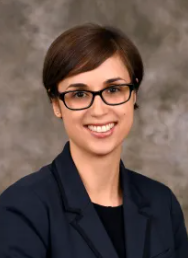 Dr. Amber Knight is Assistant Professor of Political Science and Public Administration at the University of North Carolina Charlotte. She received funding from the Centennial Center Research Grants program for her workshop “Theorizing the Politics of Disability Research Workshop” from the Edward Artinian Fund.
Dr. Knight’s research places disability at the center of political theorizing to better understand the political nature of disability and the often–disabling nature of our political arrangements. Her research has been featured in The Journal of Politics, Hypatia, and Politics, Groups, and Identities, among other outlets.
The Theorizing the Politics of Disability Research Workshop was held at APSA’s headquarters in Washington D.C. in November 2019.
It brought together junior and senior scholars in political theory who share an interest in disability politics. Attendees presented disability-related scholarship and received feedback from other experts in the field. Several of the workshop participants are currently developing a special issue to showcase how a rich variety of intellectual issues are raised by analyzing disability as a political phenomenon.
Dr. Knight is currently working on a book project, tentatively titled “The Politics of Prenatal Genetic Screening: Promoting Reproductive Autonomy and Disability Justice,” co-authored with Dr. Joshua Miller (UNCC). The guiding normative question of the book is: how can prospective mothers more autonomously decide whether they want to undergo prenatal testing, terminate a pregnancy following a positive result, carry the fetus to term, raise a child with a disability, or choose adoption? We argue that an adequate answer to this question must embed an analysis of choice in social context and attend to the ways in which wider social forces— like ableism— influence reproductive decision-making.